
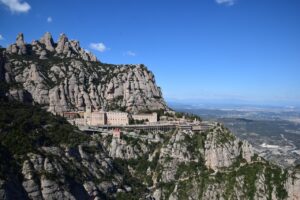
 Rising dramatically from the Catalonian plains like a divine fortress carved by celestial hands, Montserrat—”serrated mountain”—stands as one of Spain’s most spiritually significant and visually stunning destinations. This sacred peak, located just 60 kilometers northwest of Barcelona, has served as a pilgrimage site for over 1,000 years, drawing millions of visitors annually to its ancient monastery, miraculous Black Madonna, and breathtaking natural beauty that seems to bridge earth and heaven.The mountain’s distinctive conglomerate rock formations, sculpted by millions of years of erosion into fantastical spires and pinnacles, create a landscape so extraordinary that Catalans consider it the work of angels wielding golden saws. Beyond its geological marvels, Montserrat represents the spiritual heart of Catalonia, where the Santa Maria de Montserrat Abbey has preserved centuries of religious tradition while the legendary boys’ choir continues a 700-year musical heritage that transforms stone halls into celestial concert chambers. ⛪
Sacred History: A Millennium of Faith and Devotion 🙏
Montserrat’s spiritual significance began in 880 AD when legend tells of shepherd children seeing visions of the Virgin Mary accompanied by celestial music and mysterious lights descending upon the mountain. This divine intervention led to the discovery of a sacred image of the Madonna, which became the foundation for what would grow into one of Europe’s most important pilgrimage destinations and the spiritual center of Catalonian identity.
The Benedictine monastery, officially founded in 1025, has weathered centuries of political upheaval, religious persecution, and cultural transformation while maintaining its sacred mission and cultural significance. During the Spanish Civil War, the monastery provided refuge for Catalonian culture and language when both were banned, demonstrating how spiritual sanctuaries can preserve identity beyond their religious functions. 📿
Today’s monastery represents a living testament to continuous faith and cultural preservation, where monks maintain daily religious services, manage extensive cultural programs, and welcome pilgrims from around the world seeking spiritual renewal, cultural enrichment, and encounters with the divine in settings that have inspired devotion for over a millennium. The mountain’s role as Catalonia’s spiritual heart extends beyond religious significance to encompass cultural identity, artistic inspiration, and natural preservation. ✨
The Black Madonna: Catalonia’s Beloved Patron 👑
La Moreneta: The Miraculous Image
The Black Madonna of Montserrat, affectionately known as “La Moreneta” (The Little Dark One), represents one of Christianity’s most venerated Marian images and serves as the patron saint of Catalonia. This 12th-century wooden sculpture, measuring just 95 centimeters tall, depicts the Virgin Mary holding the Christ Child while both figures display the darkened complexion that gives the image its distinctive name and spiritual power.
The statue’s dark coloration, originally attributed to miraculous divine intervention, actually results from centuries of exposure to candle smoke and natural aging processes that have transformed the original light wood into its current sacred appearance. This transformation has enhanced rather than diminished the image’s spiritual significance, with millions of pilgrims considering the darkening a sign of divine blessing and accumulated prayers. 🕯️
Pilgrimage Traditions and Spiritual Encounters
Approaching the Black Madonna requires ascending marble steps worn smooth by countless pilgrims’ knees, a physical journey that symbolizes spiritual ascension and preparation for divine encounter. The sacred image rests within a specially designed shrine behind the basilica’s main altar, where pilgrims can approach close enough to touch the orb held in the Madonna’s right hand—a gesture believed to transmit blessings and answer prayers.
The pilgrimage experience encompasses both individual devotion and communal worship, where private prayer mingles with public celebration while the mountain’s sacred atmosphere enhances spiritual receptivity. Many pilgrims report profound spiritual experiences, miraculous healings, and life-changing encounters that transcend religious boundaries and speak to universal human needs for hope, healing, and divine connection. 🌟
Architectural Marvels: Sacred Spaces and Artistic Treasures 🏛️
Santa Maria de Montserrat Abbey
The monastery complex represents a masterful integration of architecture and natural landscape, where buildings seem to emerge organically from the mountain’s dramatic rock formations while maintaining harmonious proportions that complement rather than compete with the surrounding natural beauty. The basilica, rebuilt in the 19th century after Napoleon’s destruction, combines neo-Gothic and modernist elements that create spacious, light-filled spaces ideal for contemplation and worship.
The abbey’s facade features intricate stone carvings that depict biblical scenes and Catalonian saints while the interior showcases exceptional artistic treasures including medieval altarpieces, contemporary sculptures, and stained glass windows that filter mountain light into ethereal illumination. The building’s acoustic design enhances both spoken liturgy and musical performances, creating an environment where architecture serves spiritual purposes. 🎨
Museum and Cultural Treasures
The Montserrat Museum houses one of Catalonia’s most significant art collections, featuring works by Picasso, Dalí, Monet, and Caravaggio alongside ancient artifacts, religious relics, and archaeological discoveries that span human creativity from prehistoric times to contemporary expressions. The collection demonstrates how artistic inspiration and spiritual devotion have intertwined throughout history while preserving cultural treasures for future generations.
Special exhibitions regularly explore themes connecting art, spirituality, and Catalonian identity while permanent displays provide context for understanding how Montserrat has influenced artistic creation and cultural development. The museum’s educational programs offer opportunities for deeper engagement with both artistic masterpieces and the cultural heritage they represent. 🖼️
Natural Wonders: Geological Miracles and Hiking Adventures 🥾
Conglomerate Rock Formations
 Montserrat’s extraordinary landscape results from millions of years of geological processes that created the distinctive conglomerate rock formations composed of rounded pebbles and boulders cemented together by natural minerals. These formations, uplifted and sculpted by erosion, create the dramatic spires, pinnacles, and cliff faces that make Montserrat instantly recognizable and geologically unique in the Mediterranean region.
The mountain’s varied rock formations provide habitat for diverse plant and animal species while creating microclimates that support Mediterranean and alpine vegetation zones within relatively small areas. This geological diversity contributes to the mountain’s designation as a Natural Park while providing opportunities for scientific study, educational exploration, and natural beauty appreciation. 🔬
Hiking Trails and Natural Exploration
Montserrat offers hiking opportunities for all skill levels, from gentle walks suitable for families to challenging climbs that require mountaineering experience and equipment. The Sant Joan funicular provides access to elevated trailheads while marked paths lead to viewpoints, hermitages, and natural features that reveal different aspects of the mountain’s beauty and spiritual significance.
Popular trails include the path to Sant Joan peak for panoramic views, the Santa Cova route following traditional pilgrimage paths, and the Sant Jeroni summit trail that reaches the mountain’s highest point at 1,236 meters. Each trail offers unique perspectives on the surrounding landscape while providing opportunities for meditation, photography, and natural observation in settings that combine physical challenge with spiritual inspiration. 🏔️
Musical Heritage: The Escolania Boys’ Choir 🎵
700 Years of Sacred Music
The Escolania de Montserrat represents one of Europe’s oldest boys’ choirs, maintaining an unbroken tradition of sacred music that dates back to the 14th century. This musical heritage transforms daily monastic life into artistic expression while preserving Catalonian musical traditions and contributing to the mountain’s reputation as a center of cultural excellence that transcends religious boundaries.
The choir consists of 50 boys aged 9-14 who live and study at the monastery while receiving intensive musical training that maintains the highest artistic standards. Their daily performances in the basilica create moments of transcendence where human voices seem to channel divine inspiration while their recordings and international performances share Montserrat’s spiritual message worldwide. 🎼
Performance Schedule and Spiritual Impact
The Escolania performs daily at 1:00 PM and 6:45 PM in the basilica (except during July holidays and Christmas vacation), offering visitors opportunities to experience sacred music in its intended spiritual context. These performances, lasting approximately 15 minutes, feature Gregorian chant, polyphonic compositions, and traditional Catalonian religious music that showcases both historical repertoire and contemporary sacred works.
The choir’s ethereal voices, amplified by the basilica’s exceptional acoustics, create spiritual experiences that many visitors describe as transformative and deeply moving. The combination of innocent young voices, sacred texts, and mountain acoustics produces musical moments that seem to transcend earthly limitations while connecting listeners to centuries of spiritual devotion and artistic excellence. 👼
Transportation and Access: Reaching the Sacred Summit 🚂
Train and Cable Car Journey
The journey to Montserrat from Barcelona begins with the R5 train line from Plaça Espanya station, offering a comfortable one-hour ride through Catalonian countryside that gradually reveals the mountain’s dramatic silhouette. At Monistrol de Montserrat station, visitors choose between the historic rack railway (Cremallera) or the modern cable car (Aeri), both providing spectacular ascending views while building anticipation for the sacred encounter ahead.
The rack railway, operating since 1892, offers a traditional mountain climbing experience with panoramic windows that showcase changing perspectives of the rock formations and surrounding valleys. The cable car provides a more dramatic ascent with aerial views that reveal the mountain’s geological complexity and natural beauty from unique vantage points impossible to achieve by ground transportation. 🚠
Driving Routes and Parking Solutions
Driving to Montserrat via the A2 highway offers flexibility for exploring the surrounding region while providing control over timing and itinerary planning. The winding mountain road reveals constantly changing vistas while multiple parking areas accommodate different access preferences and walking abilities. Advanced reservation systems during peak seasons ensure parking availability while reducing environmental impact.
The driving route passes through traditional Catalonian towns and agricultural landscapes that provide cultural context for understanding the mountain’s significance within regional identity and economic development. Rest areas and viewpoints along the route offer opportunities for photography and preliminary appreciation of the mountain’s grandeur before reaching the monastery complex. 🚗
Spiritual Experiences: Pilgrimage and Personal Transformation 🌅
Traditional Pilgrimage Practices
Montserrat pilgrimage encompasses both external journeys and internal spiritual processes where physical movement toward the sacred mountain parallels psychological and spiritual preparation for divine encounter. Traditional pilgrimage practices include walking meditation, prayer sequences, and ritual observances that enhance receptivity to spiritual experiences while connecting contemporary pilgrims to centuries of devotional tradition.
The mountain’s multiple hermitages, scattered throughout the natural park, provide destinations for extended pilgrimage experiences where solitude, prayer, and natural beauty combine to create conditions conducive to spiritual reflection and personal transformation. These sacred spaces, some dating back to medieval times, offer retreat opportunities for those seeking deeper engagement with contemplative practices and mountain spirituality. 🏚️
Contemporary Spiritual Seeking
Modern visitors to Montserrat often discover that the mountain’s spiritual power transcends specific religious traditions, offering opportunities for personal reflection, life transition processing, and connection to transcendent experiences that speak to universal human needs for meaning, purpose, and spiritual growth. The mountain’s combination of natural beauty, sacred history, and contemplative atmosphere creates conditions that facilitate profound personal insights and spiritual renewal.
Many visitors report experiencing moments of clarity, peace, and spiritual connection that influence their lives long after returning from the mountain. These experiences often include enhanced appreciation for natural beauty, deeper understanding of spiritual traditions, and renewed commitment to personal growth and service to others. The mountain’s ability to inspire transformation continues attracting seekers from diverse backgrounds and spiritual traditions. 🦋
Cultural Significance: Catalonian Identity and Heritage 🎭
Symbol of Catalonian Resistance
Throughout history, Montserrat has served as a symbol of Catalonian cultural identity and resistance to political oppression, particularly during periods when Catalonian language and culture faced suppression. The monastery provided sanctuary for cultural preservation activities while the Black Madonna became a symbol of regional identity that transcended religious boundaries to represent cultural solidarity and resistance.
During the Franco dictatorship, when Catalonian language was banned, the monastery continued conducting services in Catalan while preserving literary and musical traditions that might otherwise have been lost. This cultural preservation role demonstrates how spiritual centers can serve broader social functions while maintaining their essential religious mission and community service. 🏴
Contemporary Cultural Programs
Today’s Montserrat continues its cultural mission through educational programs, cultural events, and artistic initiatives that celebrate Catalonian heritage while welcoming international participation and cultural exchange. The monastery’s publishing house produces books in Catalan while cultural conferences and seminars explore themes connecting spirituality, culture, and contemporary social issues.
Annual festivals and celebrations combine religious observance with cultural expression, demonstrating how traditional practices can evolve while maintaining their essential character and community significance. These events provide opportunities for cultural immersion and authentic encounters with living traditions that continue shaping Catalonian identity in the modern world. 🎪
Seasonal Experiences: Year-Round Sacred Beauty 🌺
Spring Renewal: Nature’s Spiritual Awakening
Spring transforms Montserrat into a garden of wild flowers and fresh greenery where mild temperatures and clear skies create ideal conditions for hiking, pilgrimage, and outdoor spiritual practices. The mountain’s diverse ecosystems come alive with blooming Mediterranean vegetation while moderate crowds and pleasant weather enhance both solitary contemplation and communal worship experiences.
Spring weather provides excellent visibility for mountain views and photography while comfortable temperatures make extended hiking and outdoor activities enjoyable for visitors of all ages. The season’s renewal symbolism aligns naturally with spiritual themes of rebirth and transformation, making spring visits particularly meaningful for those seeking personal growth and spiritual renewal. 🌸
Summer Pilgrimage: Peak Season Spiritual Energy
Summer brings peak pilgrimage season when international visitors join local devotees in creating vibrant spiritual communities that demonstrate Montserrat’s global significance and universal appeal. Extended daylight hours allow for comprehensive exploration while warm evenings create opportunities for outdoor prayer, meditation, and cultural events that showcase the mountain’s diverse spiritual and artistic offerings.
The season’s longer days accommodate more extensive hiking and exploration while the mountain’s elevation provides relief from Barcelona’s summer heat, making Montserrat an ideal spiritual retreat destination. Summer programming includes special concerts, cultural events, and extended worship opportunities that take advantage of favorable weather and increased visitor interest. ☀️
Autumn Contemplation: Sacred Solitude
Autumn provides arguably the most contemplative Montserrat experience, where crisp air, dramatic lighting, and reduced crowds create ideal conditions for deep spiritual reflection and personal prayer. The season’s natural beauty, enhanced by changing foliage and dramatic cloud formations, provides constantly shifting natural cathedral settings that inspire awe and spiritual receptivity.
Autumn’s moderate temperatures make hiking comfortable while the season’s introspective symbolism aligns with spiritual practices of reflection, gratitude, and preparation for inner transformation. Many visitors consider autumn the optimal time for serious spiritual retreat and pilgrimage experiences that require solitude and contemplative atmosphere. 🍂
Winter Mystery: Sacred Silence
Winter reveals Montserrat’s most mystical character where fog, snow, and dramatic weather create ethereal atmospheric conditions that enhance the mountain’s spiritual mystery and natural beauty. While weather can be unpredictable, clear winter days provide exceptional visibility and photographic opportunities while reduced visitor numbers create intimate spiritual experiences.
The season’s challenges require advance planning and weather monitoring, but winter visitors often report the most profound spiritual experiences when natural elements combine with sacred atmosphere to create transformative encounters with the divine. Winter’s silence and solitude provide ideal conditions for deep contemplation and spiritual retreat. ❄️
Photography Guide: Capturing Sacred Beauty 📷
Architectural and Sacred Art Photography
Montserrat’s architectural treasures and sacred spaces provide exceptional photography opportunities that require understanding of both technical considerations and respectful approaches to religious environments. The basilica’s interior lighting creates dramatic contrasts while the monastery’s exterior architecture benefits from golden hour illumination that enhances stone textures and architectural details.
Photographing religious ceremonies and spiritual practices requires sensitivity to sacred contexts and respect for participant privacy while seeking to capture the spiritual essence of these profound human experiences. Many of the mountain’s most compelling photographic opportunities arise from the interaction between natural beauty and human spiritual expression. ⛪
Landscape and Natural Beauty Photography
The mountain’s dramatic rock formations and changing weather conditions provide constantly evolving photographic opportunities that showcase both geological marvels and natural beauty. Early morning and late afternoon light create optimal conditions for landscape photography while fog and cloud formations add atmospheric elements that enhance the mountain’s mystical character.
Hiking trails provide access to elevated viewpoints and unique perspectives that reveal the mountain’s geological complexity and natural diversity. Understanding seasonal light patterns and weather conditions helps photographers plan sessions that capture Montserrat’s most spectacular natural moments while respecting environmental protection requirements. 🌄
Practical Visitor Information: Planning Your Sacred Journey 🗺️
Operating Hours and Accessibility
The monastery complex operates daily with varying hours for different facilities and services, requiring advance planning to coordinate visits with specific experiences such as choir performances, museum visits, and guided tours. Accessibility accommodations ensure that visitors with mobility limitations can access major attractions while specialized services support various visitor needs and preferences.
Information centers provide current schedules, weather updates, and guidance for planning visits that maximize spiritual and cultural experiences while respecting religious practices and environmental protection requirements. Advance reservations for guided tours and special events ensure availability during peak seasons while providing structured learning opportunities. ℹ️
Accommodation and Dining Options
The monastery offers accommodation for visitors seeking extended spiritual retreat experiences while nearby hotels and guesthouses provide comfortable lodging for tourists and pilgrims. Dining options include the monastery restaurant serving traditional Catalonian cuisine and cafeterias offering quick meals and refreshments for day visitors.
Picnic areas throughout the natural park provide opportunities for outdoor dining with spectacular views while gift shops offer religious articles, local products, and cultural materials that support the monastery’s mission and provide meaningful souvenirs of spiritual experiences. 🍽️
Frequently Asked Questions 🤔
How do you get to Montserrat from Barcelona?
From Barcelona, take train R5 to Monistrol de Montserrat (1 hour), then cable car or rack railway to monastery. Alternatively, drive via A2 highway (1 hour) or join organized tours. The journey offers spectacular mountain views and multiple transport options for different preferences and budgets.
What is the Black Madonna of Montserrat?
The Black Madonna (La Moreneta) is a 12th-century wooden sculpture of Virgin Mary with Child, darkened by age and candle smoke. Located in the basilica, it’s Catalonia’s patron saint and attracts millions of pilgrims annually for its miraculous reputation and spiritual significance in Catalonian culture.
What are the best hiking trails on Montserrat?
Top trails include Sant Joan peak (spectacular views), Santa Cova (pilgrimage path), Sant Jeroni summit (highest point), and Degotalls waterfall trail. Difficulty ranges from easy walks to challenging climbs, all offering unique perspectives of the dramatic rock formations and spiritual sites.
When is the best time to visit Montserrat?
Best times are spring (March-May) and autumn (September-November) for pleasant weather and clear views. Summer offers longest days but can be crowded. Winter provides mystical atmosphere but weather can be unpredictable. Early morning visits avoid crowds regardless of season.
Can you hear the boys’ choir at Montserrat?
The Escolania boys’ choir performs daily at 1pm and 6:45pm in the basilica (except July and Christmas holidays). This 700-year-old musical tradition offers ethereal performances in sacred acoustics. Arrive early as seating is limited and performances attract large crowds.
Is it possible to stay overnight at Montserrat?
Yes, the monastery offers accommodation for spiritual retreat participants while nearby hotels provide tourist lodging. Staying overnight allows for sunrise/sunset experiences, evening prayer services, and deeper spiritual immersion away from day-trip crowds.
Are there guided tours available?
Multiple guided tour options include monastery tours, hiking excursions, cultural programs, and specialized spiritual retreats. Tours provide historical context, cultural insights, and access to areas not available to individual visitors while accommodating different interests and physical abilities.
Hidden Treasures and Secret Experiences 💎
Hermitages and Sacred Caves
Beyond the main monastery, Montserrat harbors numerous hermitages and sacred caves scattered throughout the natural park where hermits once lived in solitude and pilgrims continue seeking spiritual encounters away from crowds. These hidden sacred spaces, some accessible only by hiking trails, offer opportunities for private prayer and contemplation in settings that maximize natural beauty and spiritual atmosphere.
The Santa Cova (Holy Cave) where legend places the discovery of the Black Madonna provides a particularly significant pilgrimage destination accessible by funicular and walking path. This sacred grotto, enhanced by modernist sculptures and natural acoustics, creates intimate spiritual experiences that connect visitors to the mountain’s miraculous origins and continuing spiritual power. 🕳️
Secret Viewpoints and Natural Wonders
Advanced hikers can discover hidden viewpoints and natural features known primarily to local mountaineers and serious pilgrims willing to venture beyond marked trails. These secret locations often provide the most spectacular photographic opportunities and profound spiritual experiences while requiring proper preparation, navigation skills, and respect for environmental protection.
Natural features including hidden springs, wildlife viewing areas, and geological formations offer opportunities for scientific observation and natural meditation that complement the mountain’s spiritual significance. These discoveries create personal connections to Montserrat’s natural sanctity while providing unique experiences unavailable through conventional tourism. 🔍
Conclusion: Where Heaven Touches Earth 🌟
Montserrat stands as a testament to the enduring power of sacred places where natural beauty, spiritual devotion, and cultural heritage converge to create transformative experiences that transcend religious boundaries and speak to universal human needs for meaning, beauty, and connection to the divine. This extraordinary mountain demonstrates how physical landscapes can serve as bridges between earthly existence and spiritual transcendence while preserving cultural identity and inspiring artistic creation across centuries.
The mountain’s greatest gift lies not in any single attraction or experience, but in its ability to awaken spiritual sensitivity and cultural appreciation while providing refuge from contemporary life’s complexities and distractions. Whether you come seeking religious pilgrimage, cultural enrichment, natural beauty, or personal transformation, Montserrat offers encounters with the sacred that can profoundly influence perspectives on life, meaning, and human potential for spiritual growth.
As you ascend this sacred mountain, remember that you’re joining a millennium-long procession of pilgrims, seekers, and travelers who have found in Montserrat’s dramatic heights a gateway to transcendent experiences and deeper understanding of life’s spiritual dimensions. The mountain’s enduring appeal lies in its capacity to inspire wonder, facilitate transformation, and provide glimpses of divine beauty that illuminate the sacred potential present in both natural landscapes and human hearts. Welcome to where heaven touches earth, where ancient stones sing with celestial voices, and where every step upward brings you closer to the infinite. ⛰️✨
- https://www.abadiamontserrat.cat/ – Abadia de Montserrat
- museudemontserrat.com – Museum of Montserrat
- montserratvisita.com – Montserrat Visita
- https://montserratmonastery.com– Montserrat Monastery
Last updated: July 16, 2025
