
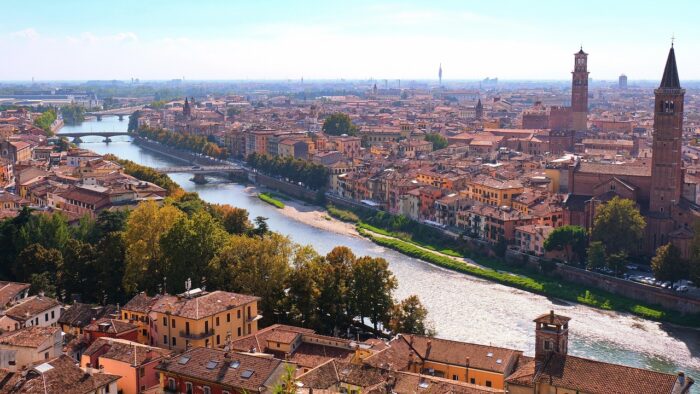
Shakespeare’s Verona: Romance and Literary Legacy 📚
Verona’s transformation into the world’s capital of romance began when William Shakespeare chose this medieval Italian city as the setting for his immortal tragedy “Romeo and Juliet,” written around 1595. Though the star-crossed lovers were fictional characters, Shakespeare’s genius lay in selecting a city whose atmosphere, architecture, and passionate Italian spirit perfectly embodied the themes of love, family honor, and tragic destiny that define the play’s enduring appeal across cultures and centuries.
The playwright’s choice proved prophetic, as Verona’s medieval streets, noble palazzos, and intimate piazzas create the perfect backdrop for romantic drama while the city’s historical conflicts between powerful families provided authentic context for the feuding Montagues and Capulets. Archaeological evidence reveals that families named Montecchi and Cappelletti actually existed in medieval Verona, lending historical credibility to Shakespeare’s fictional narrative while demonstrating how literature and history intertwine to create lasting cultural mythology. 🏰
Today’s Verona embraces its literary heritage while maintaining authentic Italian character, where romantic tourism coexists with genuine local life and contemporary culture continues flourishing in settings that have inspired artistic creation for generations. The city’s success in balancing literary tourism with historical preservation demonstrates how cultural heritage can support economic development while maintaining the authentic character that originally inspired artistic celebration. ✍️
Juliet’s Legacy: Love Letters and Eternal Romance 💌
Casa di Giulietta: The World’s Most Famous Balcony
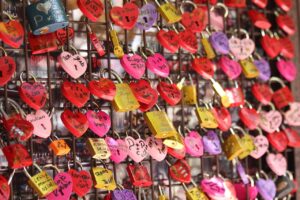 The Casa di Giulietta (Juliet’s House) on Via Cappello represents one of the world’s most visited romantic destinations, where millions of visitors annually pilgrimage to see the famous balcony, touch Juliet’s bronze statue for good luck in love, and participate in the global tradition of leaving love letters that has transformed a literary fiction into a living symbol of hope and romantic devotion.
The 13th-century building, originally owned by the Cappello family (whose name inspired Shakespeare’s Capulets), features authentic medieval architecture enhanced by the iconic balcony added in the 1930s to satisfy visitor expectations for a tangible connection to the beloved story. The courtyard’s walls, covered with countless love messages in every language, create a constantly evolving testament to love’s universal power while Juliet’s statue, worn smooth by countless touches, demonstrates how fictional characters can inspire real faith and hope. 💕
Juliet Club: Answering Love’s Questions
The Juliet Club, founded by volunteers who answer the thousands of letters addressed to Juliet that arrive in Verona annually, represents a unique cultural phenomenon where literature inspires genuine human connection and support. These dedicated volunteers, known as “Juliet’s Secretaries,” respond to love letters from around the world in multiple languages, providing comfort, advice, and hope to people seeking guidance in matters of the heart.
The club’s work demonstrates how Shakespeare’s fictional character has evolved into a symbol of compassionate understanding and romantic wisdom, while their annual contest for the most touching love letter shows how contemporary people continue finding solace and inspiration in stories that speak to universal human experiences. This remarkable tradition transforms literary tourism into meaningful cultural exchange and emotional support. 💝
Romeo’s House and Romantic Walking Tours
Casa di Romeo, located on Via Arche Scaligere, offers a more intimate and authentic medieval experience where visitors can appreciate genuine 14th-century architecture without crowds while exploring the atmospheric streets where Shakespeare imagined his tragic hero living. The building’s brick facade and crenellated walls provide excellent examples of medieval Veronese architecture while the surrounding neighborhood reveals authentic local life.
Romantic walking tours connecting Juliet’s House, Romeo’s House, and the supposed site of their secret wedding create comprehensive literary experiences while revealing Verona’s genuine historical and architectural treasures. These tours demonstrate how literary tourism can enhance rather than overshadow authentic cultural exploration while providing context for understanding both fictional narratives and real historical developments. 👫
Roman Grandeur: The Magnificent Arena 🏛️
Ancient Amphitheater: Monument to Eternity
The Arena di Verona, built around 30 AD, stands as one of the world’s best-preserved Roman amphitheaters and Italy’s third-largest after the Colosseum and Capua’s amphitheater. This magnificent elliptical structure, capable of holding 30,000 spectators in ancient times and 15,000 today, demonstrates Roman engineering excellence while serving as a living monument where contemporary audiences continue experiencing the power of live performance in settings designed for dramatic spectacle.
The arena’s exceptional preservation results from continuous use throughout its 2,000-year history, adapting from gladiatorial contests to medieval tournaments, Renaissance celebrations, and modern opera performances that have made it one of the world’s most prestigious venues for outdoor lyrical productions. The building’s pink and white limestone construction creates stunning visual effects while its acoustics remain so exceptional that performances require no electronic amplification. 🎪
Opera Festival: Where Music Meets History
The annual Verona Opera Festival, running from June to September, transforms the ancient arena into the world’s largest open-air opera house where international stars perform classic productions under starlit skies for audiences seated on the same stone steps that once accommodated Roman citizens. This extraordinary cultural event demonstrates how historical preservation can support contemporary artistic excellence while creating unique experiences impossible to replicate in modern venues.
Festival productions often feature spectacular staging that takes advantage of the arena’s massive scale and dramatic architecture while the outdoor setting adds natural elements—sunset lighting, evening breezes, and star-filled skies—that enhance musical performances with atmospheric beauty. The combination of world-class voices, magnificent productions, and ancient Roman grandeur creates transcendent experiences that represent the pinnacle of cultural tourism and artistic achievement. 🎵
Arena Museum and Underground Tours
The Arena Museum, located beneath the amphitheater, reveals fascinating details about Roman entertainment culture, gladiatorial combat, and the building’s architectural engineering while providing access to underground chambers and corridors that once housed wild animals, gladiators, and stage machinery. Interactive exhibits explain the complex social and political functions of public spectacles in Roman society while archaeological discoveries continue revealing new information about ancient entertainment practices.
Special underground tours provide exclusive access to restricted areas while expert guides explain the sophisticated hydraulic systems, mechanical stage devices, and logistical operations that supported complex productions. These behind-the-scenes experiences enhance appreciation for Roman engineering sophistication while demonstrating how contemporary opera productions adapt ancient spaces for modern artistic expression. 🔍
Medieval Splendor: Piazzas and Palazzos 🏰
Piazza delle Erbe: The Heart of Venetian Life
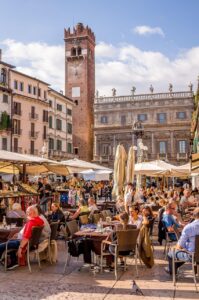 Piazza delle Erbe, built over the ancient Roman forum, represents one of Italy’s most beautiful and vibrant market squares where medieval palazzos, Renaissance frescoes, and baroque monuments create an architectural symphony while daily markets, outdoor cafes, and local life demonstrate how historical preservation can support contemporary community vitality. The square’s merchants have traded continuously for over 2,000 years, maintaining commercial traditions that connect ancient Rome to modern Italy.
The piazza’s surrounding buildings showcase diverse architectural styles spanning centuries of Veronese development, from the medieval Palazzo Maffei to the baroque Palazzo del Comune, while the central market fountain and medieval column create focal points that organize the space for both commercial activity and social gathering. Evening aperitivo culture transforms the square into an outdoor salon where locals and visitors mingle in settings that epitomize Italian urban lifestyle. 🍷
Piazza dei Signori: Political Power and Artistic Beauty
Piazza dei Signori, connected to Piazza delle Erbe through the elegant Arco della Costa, served as Verona’s political center where the powerful Scaliger family ruled with magnificence that rivaled Venice and Florence while commissioning architectural and artistic works that transformed the city into a Renaissance cultural capital. The square’s harmonious proportions and sophisticated design demonstrate how urban planning can create spaces that enhance both civic function and aesthetic beauty.
Dante’s statue, erected in the square’s center, honors the great poet who found refuge in Verona during his exile from Florence while the surrounding Loggia del Consiglio and Palazzo del Capitano showcase Renaissance architecture at its finest. The square’s intimate scale and architectural coherence create perfect settings for cultural events and quiet contemplation while maintaining its historical function as a gathering place for community life. 📜
Scaliger Tombs: Gothic Architectural Masterpieces
The Arche Scaligere (Scaliger Tombs) represent some of Europe’s finest examples of Gothic funerary architecture where elaborate stone canopies, intricate sculptural details, and symbolic decorations create magnificent monuments to the powerful family that ruled Verona during its medieval golden age. These towering structures demonstrate how political power expressed itself through artistic patronage while creating lasting cultural treasures that continue inspiring artistic appreciation.
The tombs’ sophisticated architectural design and sculptural programs reveal the intersection of political ambition, religious devotion, and artistic innovation that characterized medieval Italian city-states while their preservation within the urban fabric demonstrates successful integration of monumental architecture with daily city life. Walking among these Gothic masterpieces provides intimate encounters with medieval artistic achievement while revealing the cultural sophistication that made Verona a major Renaissance center. ⚱️
Castelvecchio: Fortress and Art Museum 🎨
Medieval Military Architecture
Castelvecchio, built by Cangrande II della Scala in 1354, represents one of Italy’s most impressive medieval fortifications where sophisticated military engineering combines with residential luxury to create a fortress-palace that demonstrates how medieval rulers balanced security concerns with courtly magnificence. The castle’s distinctive red brick construction and crenellated walls create dramatic silhouettes against the Adige River while its strategic position controlled river access and defended the city’s western approaches.
The castle’s architectural innovations include advanced defensive features such as multiple courtyards, drawbridges, and tower systems that provided security during turbulent medieval periods while elegant residential quarters reveal the sophisticated lifestyle of Renaissance nobility. The complex’s adaptation into a museum demonstrates how historical preservation can provide new functions for ancient buildings while maintaining their essential character and architectural integrity. 🏰
Castelvecchio Museum: Renaissance Art Collection
The Castelvecchio Museum houses Verona’s premier art collection featuring medieval sculptures, Renaissance paintings, and ancient artifacts that illuminate the city’s cultural development while providing context for understanding artistic patronage, religious devotion, and social structures that shaped Veronese society throughout its golden age. The collection’s highlights include works by Pisanello, Mantegna, and other masters who worked in Verona’s culturally rich environment.
The museum’s installation, designed by renowned architect Carlo Scarpa, demonstrates how contemporary design can enhance historical architecture while creating optimal conditions for art display and visitor experience. Scarpa’s sensitive interventions respect the castle’s medieval character while providing modern amenities and lighting that allow artworks to be appreciated in their historical context within authentic architectural settings. 🖼️
Ponte Scaligero: Engineering Marvel
The Ponte Scaligero (Scaliger Bridge), connecting Castelvecchio to the opposite riverbank, represents a masterpiece of medieval engineering where innovative brick arch construction created elegant spans that have withstood floods, earthquakes, and warfare for over 650 years. The bridge’s distinctive battlemented design and fortified gateway demonstrate how infrastructure projects served both practical and defensive functions while creating architectural landmarks.
The bridge’s reconstruction after World War II destruction, using original stones recovered from the river, exemplifies successful historical restoration that maintains authentic materials and construction techniques while meeting contemporary safety standards. Walking across this magnificent structure provides spectacular views of the Adige River and city skyline while connecting visitors to medieval engineering achievements that continue serving modern transportation needs. 🌉
Religious Heritage: Sacred Art and Spiritual Beauty ⛪
Verona Cathedral: Architectural Evolution
The Duomo of Verona, officially Santa Maria Matricolare, represents eight centuries of architectural development where Romanesque foundations support Gothic additions and Renaissance decorations that create a complex artistic narrative reflecting changing religious practices, aesthetic preferences, and cultural influences throughout Verona’s history. The cathedral’s facade combines pink marble details with classical proportions while the interior houses exceptional artworks including Titian’s magnificent “Assumption of the Virgin.”
The cathedral complex includes the ancient baptistery of San Giovanni in Fonte with its remarkable octagonal font carved from a single block of marble, demonstrating the sophisticated stone-working skills that made Verona famous throughout medieval Europe. Archaeological investigations continue revealing earlier church structures while restoration projects maintain the building’s spiritual function alongside its role as an artistic and historical monument. 🕊️
Sant’Anastasia: Gothic Grandeur
The Basilica of Sant’Anastasia, Verona’s largest church, showcases the city’s Gothic architectural achievements where soaring brick vaults, elaborate stone tracery, and magnificent frescoes create spiritual atmospheres that demonstrate how religious devotion inspired artistic excellence. The church’s famous hunchback holy water holders, carved with remarkable detail and humor, reveal the playful spirit that characterized medieval religious art alongside its serious spiritual purposes.
The basilica’s art collection includes frescoes by Pisanello and other masters while its architectural innovations influenced church design throughout Northern Italy. The building’s continued use for religious services alongside cultural tourism demonstrates how sacred spaces can maintain their spiritual function while welcoming visitors seeking artistic and architectural appreciation in settings designed for contemplation and worship. 🎪
San Zeno Maggiore: Romanesque Masterpiece
The Basilica of San Zeno Maggiore represents one of Italy’s finest Romanesque churches where magnificent bronze doors, marble reliefs, and perfectly proportioned architecture create harmonious expressions of medieval religious art while the attached monastery preserves authentic monastic environments. The church’s rose window, known as the “Wheel of Fortune,” demonstrates sophisticated theological symbolism while its crypt contains the remains of San Zeno, Verona’s patron saint.
Mantegna’s altarpiece triptych, one of Renaissance art’s masterpieces, reveals how religious commissioning supported artistic innovation while the church’s architectural details provide textbook examples of Romanesque design principles. The basilica’s peaceful cloister and gardens offer contemplative spaces while the building’s integration with surrounding residential neighborhoods demonstrates how religious institutions functioned as community centers in medieval urban planning. 🌿
Venetian Lifestyle: Cafes, Cuisine, and La Dolce Vita 🍝
Aperitivo Culture and Social Traditions
Verona’s aperitivo culture represents one of Northern Italy’s most sophisticated social traditions where evening gatherings in historic piazzas and elegant cafes create opportunities for community connection, culinary pleasure, and aesthetic appreciation in settings that enhance rather than compete with architectural beauty. The city’s numerous wine bars and historic cafes provide authentic environments for experiencing Venetian social customs while supporting local businesses and cultural continuity.
Traditional aperitivo venues often occupy ground floors of medieval palazzos or Renaissance buildings where architectural details create intimate atmospheres while outdoor seating in historic squares allows for people-watching and cultural observation. The custom of offering complimentary cicchetti (small plates) with drinks demonstrates Italian hospitality while providing opportunities for sampling regional specialties and engaging in casual cultural exchange with locals and fellow travelers. 🥂
Veronese Cuisine: Regional Specialties
Veronese cuisine reflects the city’s position between Alpine and Mediterranean influences where risotto dishes, polenta preparations, and fresh pasta combine with local wines to create distinctive regional flavors that showcase both agricultural abundance and culinary sophistication. Signature dishes include risotto all’Amarone made with the region’s prestigious wine, bollito misto (mixed boiled meats), and pandoro, Verona’s contribution to Italian Christmas traditions.
Local markets, particularly at Piazza delle Erbe, provide opportunities for discovering regional products while cooking classes and food tours offer structured explorations of Veronese culinary culture. The city’s restaurants range from traditional osterie serving family recipes to innovative venues that reinterpret regional classics using contemporary techniques while maintaining connections to local ingredients and cultural traditions. 🍷
Valpolicella Wine Region: Liquid Poetry
The nearby Valpolicella wine region produces some of Italy’s most prestigious wines including Amarone, Ripasso, and Valpolicella Classico that complement Veronese cuisine while supporting local agricultural traditions and economic development. Wine tours from Verona provide access to family vineyards and historic cellars where traditional winemaking techniques continue producing exceptional wines in landscapes that inspire both viticultural excellence and romantic appreciation.
The region’s unique appassimento process, where grapes are dried before fermentation to concentrate flavors, creates wines of extraordinary complexity and longevity while wine tastings in historic villas and countryside estates provide cultural experiences that combine agricultural education with aesthetic pleasure. These excursions demonstrate how cultural tourism can support rural communities while providing urban visitors with authentic encounters with Italian agricultural heritage. 🍇
Transportation and Accessibility: Gateway to Northern Italy 🚂
Rail Connections: Strategic Position
Verona’s strategic location on major rail lines connecting Milan, Venice, Rome, and Central Europe makes it an ideal base for exploring Northern Italy while its efficient public transportation system and walkable historic center provide easy access to all major attractions without requiring private vehicles. High-speed train services reach Venice and Milan in 1.5 hours while regional connections provide access to Lake Garda, Padua, and other Venetian destinations.
The train station’s proximity to the historic center allows immediate access to major attractions while integrated bus systems connect outlying areas and provide transportation to regional destinations. The city’s compact size makes walking the preferred method for exploring the historic center while bicycle rental services support eco-friendly transportation and provide access to riverfront paths and suburban areas. 🚴♀️
Airport Access and Regional Connectivity
Verona Villafranca Airport provides international connections while shuttle services and public transportation connect the airport to the city center and major destinations. The airport’s proximity to Lake Garda and other regional attractions makes it convenient for travelers seeking comprehensive Northern Italy experiences while car rental services provide flexibility for exploring rural areas and wine regions not accessible by public transport.
Regional bus networks connect Verona to numerous destinations throughout Veneto and neighboring regions while organized tours provide convenient access to popular destinations such as Lake Garda, the Dolomites, and neighboring cities. The excellent transportation infrastructure supports both independent travel and organized tourism while reducing environmental impact through efficient public transit systems. ✈️
Seasonal Experiences: Year-Round Romance and Culture 🌹
Spring Romance: Perfect Weather for Love
Spring transforms Verona into a garden city where mild temperatures, blooming Mediterranean vegetation, and longer daylight hours create ideal conditions for romantic exploration and outdoor cultural activities. The season’s renewal symbolism aligns perfectly with romantic tourism while comfortable weather makes walking tours, outdoor dining, and cultural events particularly enjoyable for couples and culture enthusiasts seeking authentic Italian experiences.
Spring festivals often include outdoor concerts, art exhibitions, and cultural programs that take advantage of favorable weather while religious celebrations provide opportunities for experiencing authentic local traditions and community life. The season’s excellent visibility and pleasant temperatures make photography and sightseeing optimal while outdoor restaurant seating becomes comfortable for extended dining and cultural observation. 🌸
Summer Opera Season: Cultural Peak
Summer brings Verona’s cultural calendar to its pinnacle when the Arena Opera Festival attracts international audiences for world-class performances in the magnificent Roman amphitheater while extended daylight hours allow for comprehensive cultural exploration and diverse recreational activities. The season’s warm evenings create perfect conditions for outdoor dining, cultural events, and romantic walks through illuminated historic neighborhoods.
Summer programming includes not only opera performances but also concerts, theatrical productions, and cultural festivals that showcase Verona’s contemporary cultural vitality while longer tourist seasons support local businesses and cultural institutions. The season’s increased international activity creates cosmopolitan atmospheres while maintaining authentic Italian character and community life. ☀️
Autumn Cultural Focus: Harvest and Reflection
Autumn provides exceptional conditions for cultural exploration when comfortable temperatures, dramatic lighting, and reduced crowds create optimal circumstances for museum visits, architectural appreciation, and intimate cultural experiences. The season’s natural beauty enhances outdoor historical sites while harvest activities in surrounding wine regions provide opportunities for cultural tourism that supports local agricultural traditions.
Wine harvest festivals and autumn cultural programming often coincide with the season’s contemplative atmosphere while comfortable temperatures make extended walking tours and outdoor cultural activities enjoyable. The season’s excellent light conditions benefit photography and artistic appreciation while maintaining access to all major attractions without summer crowding. 🍂
Winter Intimacy: Authentic Local Life
Winter reveals Verona’s most authentic character when local life predominates and cultural venues provide intimate experiences without crowds while mild Northern Italian winter weather allows for comfortable exploration during sunny periods. The season’s romantic atmosphere, enhanced by holiday lighting and decorations, creates perfect conditions for couples seeking intimate cultural experiences and authentic local interaction.
Museums, churches, and indoor cultural venues provide alternatives during inclement weather while many restaurants and cultural institutions continue operating with seasonal schedules that emphasize local traditions and community events. Winter’s peaceful atmosphere enhances appreciation for architectural details and artistic treasures while providing genuine insights into contemporary Veronese life and culture. ❄️
Photography Guide: Capturing Romance and Beauty 📷
Romantic Architecture and Literary Sites
Photographing Verona’s romantic heritage requires understanding of lighting conditions, architectural details, and cultural sensitivity while capturing the atmospheric qualities that make the city a symbol of love and artistic inspiration. The Casa di Giulietta provides numerous photographic opportunities from courtyard compositions to balcony details while respecting other visitors and avoiding commercial photography restrictions.
Golden hour lighting enhances the warm tones of Verona’s pink marble and brick architecture while early morning sessions provide opportunities for capturing major sites without crowds. Romeo and Juliet themed photography benefits from understanding the literary context while architectural photography should emphasize the authentic medieval and Renaissance details that provide historical context for the romantic associations. 💕
Arena and Cultural Events Photography
The Arena di Verona offers spectacular photographic opportunities both as architectural monument and cultural venue where different lighting conditions reveal various aspects of Roman engineering and contemporary cultural vitality. Opera performance photography requires special permissions and equipment considerations while respecting performer and audience privacy during cultural events.
Architectural photography of the arena benefits from understanding the building’s elliptical geometry and stone construction while cultural event photography should capture the unique atmosphere of performances in ancient settings. Wide-angle compositions can encompass the arena’s scale while detailed shots reveal architectural features and cultural activities that demonstrate continuity between ancient and contemporary uses. 🎭
Urban Life and Cultural Photography
Verona’s piazzas and streets provide rich opportunities for cultural photography that captures authentic Italian urban life while respecting privacy and cultural sensitivity. Market scenes, aperitivo culture, and daily life provide subjects that demonstrate contemporary Veronese society while architectural backgrounds add historical context and visual interest.
Street photography opportunities include cultural events, religious celebrations, and seasonal festivals while architectural photography can focus on details that reveal artistic craftsmanship and historical development. Understanding seasonal light patterns and cultural schedules helps photographers plan sessions that capture Verona’s diverse character while respecting local customs and community life. 🏙️
Budget Planning: Affordable Romance and Culture 💰
Accommodation and Dining Strategies
Verona offers accommodation options for every budget from luxury hotels in converted palazzos to hostels and guesthouses that provide comfortable lodging at reasonable costs while the city’s compact size minimizes transportation expenses and maximizes time efficiency for cultural exploration. Vacation rentals often provide excellent value for longer stays while allowing access to local markets and cooking facilities for budget-conscious travelers.
Dining costs vary significantly between tourist-focused restaurants near major attractions and authentic local establishments that serve regional specialties at reasonable prices while providing genuine cultural experiences. Aperitivo culture provides opportunities for sampling local cuisine at minimal cost while markets and food shops allow for picnic preparation and budget-friendly meals with romantic piazza settings. 🍽️
Cultural Attractions and Free Experiences
Many of Verona’s most significant attractions including the exterior architecture of major monuments, romantic streets, and beautiful piazzas can be appreciated without admission fees while church visits often provide free access to exceptional art and architecture. Walking tours, either self-guided or organized, offer comprehensive cultural experiences at various price points while public transportation provides economical access to regional destinations.
Opera and cultural event tickets range from budget-friendly upper gallery seats to premium orchestra positions, allowing access to world-class performances at various price points while advance booking often provides significant savings. Many museums offer reduced admission fees during specific hours or seasons while cultural passes provide discounts on multiple attractions and services for comprehensive exploration. 🎟️
Seasonal Cost Considerations and Money-Saving Tips
Accommodation and dining costs fluctuate significantly between high summer opera season and off-peak periods, creating opportunities for budget optimization through strategic timing while maintaining access to all major cultural attractions and romantic experiences. Spring and autumn provide optimal cost-benefit ratios with excellent weather, full cultural programming, and reduced accommodation costs while winter offers the lowest prices for travelers prioritizing cultural exploration and romantic atmosphere over outdoor activities.
Advanced booking for accommodations, transportation, and cultural events often provides substantial savings while local tourism cards and cultural passes offer discounts on multiple attractions, public transportation, and partner restaurants. Understanding seasonal pricing patterns and taking advantage of mid-week rates can significantly reduce total trip costs while maintaining high-quality romantic and cultural experiences in this world-class destination. 💳
Lake Garda Excursions: Alpine Beauty Meets Romance 🏔️
Sirmione: Peninsula Paradise
The enchanting town of Sirmione, just 30 minutes from Verona, extends into Lake Garda on a narrow peninsula crowned by a magnificent Scaliger castle where thermal springs, Roman ruins, and spectacular lake views create perfect settings for romantic excursions and natural beauty appreciation. The town’s pedestrian-only historic center, accessible only through the medieval castle gateway, preserves authentic Italian charm while providing access to luxury spas, excellent restaurants, and scenic walking paths.
The Grotte di Catullo (Catullus Caves), actually the ruins of a massive Roman villa, provide dramatic archaeological sites with panoramic lake views while the town’s thermal baths offer relaxation and wellness experiences in settings that have attracted visitors since Roman times. Boat excursions from Sirmione provide access to other lake destinations while creating opportunities for scenic photography and romantic moments on Italy’s largest and most beautiful lake. ⛵
Bardolino and Garda Wine Country
The eastern shores of Lake Garda, including the charming towns of Bardolino and Garda, combine lakeside beauty with renowned wine production where family vineyards produce distinctive local wines in landscapes that epitomize Northern Italian agricultural and natural beauty. Wine tours from Verona provide comprehensive experiences that include vineyard visits, cellar tours, and tastings while scenic drives reveal constantly changing vistas of lake, mountains, and terraced vineyards.
These excursions demonstrate how cultural tourism can support rural communities while providing urban visitors with authentic encounters with Italian agricultural heritage and natural beauty. The region’s restaurants specialize in lake fish preparations and local specialties while outdoor dining areas provide romantic settings with spectacular views that enhance both culinary and cultural experiences. 🍾
Frequently Asked Questions 🤔
Where is Juliet’s balcony in Verona?
Juliet’s balcony is located at Casa di Giulietta on Via Cappello 23 in Verona’s historic center. The 13th-century house features the famous balcony, Juliet’s statue, and courtyard where visitors leave love letters. While fictional, it’s based on the Cappello family home and has become a pilgrimage site for lovers worldwide.
What is the Verona Arena and when are opera performances?
Verona Arena is a magnificent Roman amphitheater from 30 AD, hosting world-class opera performances during the summer festival (June-September). The arena seats 15,000 spectators and offers exceptional acoustics for outdoor opera in an ancient Roman setting. Tickets range from budget gallery seats to premium orchestra positions.
How do you get to Verona from Venice or Milan?
From Venice: high-speed trains (1.5 hours) or regional trains (2 hours). From Milan: high-speed trains (1.5 hours) or regional services (2 hours). Verona is perfectly positioned for Northern Italy exploration with excellent rail connections to major cities and easy access to Lake Garda.
When is the best time to visit Verona?
Best times are April-June and September-October for pleasant weather and fewer crowds. Summer (July-August) offers opera season but higher temperatures and crowds. Spring and autumn provide ideal conditions for walking tours, outdoor dining, and romantic exploration with comfortable temperatures.
Is Verona worth visiting for a day trip?
Yes! Verona’s compact historic center allows visiting major Romeo and Juliet sites, the Arena, and Piazza delle Erbe in one day. However, 2-3 days allows for opera performances, museums, Lake Garda excursions, and a more relaxed romantic experience of this enchanting city.
Can you visit Romeo and Juliet sites for free?
You can see Juliet’s balcony and courtyard for free, though entering the house museum requires admission. Romeo’s House can be viewed from the street without charge. Many romantic walking routes through medieval streets and piazzas are completely free while providing authentic Shakespearean atmosphere.
What should couples do in Verona besides Romeo and Juliet sites?
Couples should experience aperitivo in Piazza delle Erbe, attend opera at the Arena, take romantic walks along the Adige River, visit Castelvecchio for art and river views, explore wine regions, enjoy sunset at Ponte Pietra, and experience Lake Garda day trips for natural beauty and thermal spas.
Hidden Gems and Romantic Secrets 💎
Secret Viewpoints and Romantic Spots
Beyond the famous attractions, Verona harbors numerous hidden romantic locations known primarily to locals and experienced travelers willing to explore beyond obvious tourist destinations. The Giardino Giusti, a Renaissance garden with cypress groves and scenic terraces, provides intimate settings for romantic walks while offering spectacular city views that encompass both historical monuments and natural beauty in peaceful environments away from crowds.
The Ponte Pietra, Verona’s ancient Roman bridge, offers particularly romantic sunset viewing while the Sant’Andrea tower provides panoramic vistas for those willing to climb its medieval stairs. The Adige riverbanks feature scenic walking paths that connect historical sites while providing opportunities for quiet contemplation and romantic moments in natural settings that complement the city’s architectural treasures. 🌅
Local Festivals and Romantic Traditions
Verona’s festival calendar includes numerous events that celebrate romance, literature, and local culture while providing authentic experiences of community life and traditions. The annual Verona in Love festival in February transforms the city into a celebration of romance with special events, romantic dinners, and cultural programming that demonstrates how literary heritage continues inspiring contemporary cultural creativity and community celebration.
Traditional Italian celebrations including religious festivals, seasonal markets, and cultural events provide opportunities for experiencing authentic local culture while participating in community traditions that reveal the genuine social character underlying Verona’s romantic tourism identity. These events often feature local music, traditional food, and community activities that welcome visitor participation while supporting cultural continuity. 💝
Conclusion: Where Love Lives Forever ✨
Verona stands as the eternal testament to love’s power to transcend time, culture, and circumstance, where Shakespeare’s immortal story continues inspiring millions of visitors to seek beauty, romance, and authentic human connection in settings that perfectly embody the timeless themes of passion, art, and the triumph of love over adversity. This remarkable city demonstrates how literature can transform physical spaces into symbols of universal human experience while historical preservation maintains the authentic character that originally inspired artistic creation.
The city’s greatest achievement lies in successfully balancing its role as the world’s romantic capital with its identity as a living Italian community where contemporary culture flourishes alongside historical preservation, creating authentic experiences that satisfy both romantic tourism and genuine cultural exploration. From dawn walks through medieval streets to evening opera performances in ancient Roman settings, every moment in Verona offers opportunities for connecting with the deep cultural currents that continue shaping our understanding of love, beauty, and artistic expression.
As you wander through Verona’s romantic streets, stand beneath Juliet’s famous balcony, and experience world-class opera in settings where gladiators once fought, remember that you’re walking in the footsteps of countless lovers, dreamers, and cultural pilgrims who have found in this magical city confirmation that beauty, love, and art represent humanity’s greatest achievements. Welcome to Verona, where every stone whispers of romance, every piazza echoes with poetry, and every sunset reminds us that some stories are truly eternal. 💕🎭