
Last Updated: June 2025 | Reading Time: 15 minutes
Table of Contents
Welcome to Milan, where Renaissance masterpieces meet cutting-edge fashion, and where every cobblestone tells a story of innovation, artistry, and Italian excellence. As Italy’s economic powerhouse and global fashion capital, Milan offers an intoxicating blend of historical grandeur and contemporary sophistication that captivates millions of visitors annually.
This comprehensive Milan travel guide will unlock the secrets of Italy’s most dynamic city, revealing hidden gems alongside world-famous landmarks, guiding you through the labyrinth of fashion districts, and helping you experience Milan like a true Milanese local.
🎯 Why Visit Milan? The Magic Behind Italy’s Fashion Capital
Milan stands as a testament to Italian ingenuity, seamlessly blending 2,000 years of history with cutting-edge modernity. Unlike Rome’s ancient grandeur or Florence’s Renaissance splendor, Milan pulses with contemporary energy while honoring its storied past. The city serves as Europe’s fashion and design epicenter, home to legendary fashion houses like Prada, Versace, and Armani, while simultaneously housing one of the world’s most spectacular Gothic cathedrals.
 The city’s unique appeal lies in its multifaceted personality. By day, Milan bustles with business activity in the gleaming Porta Nuova district, where skyscrapers pierce the sky in Italy’s most modern cityscape. By evening, aperitivo culture takes over, transforming the city into a sophisticated playground where locals and visitors alike gather in elegant bars and restaurants.
Milan’s culinary scene deserves special mention, offering everything from traditional Lombard cuisine to innovative molecular gastronomy. The city boasts more Michelin-starred restaurants than any other Italian city, yet maintains an authentic street food culture that rivals any global metropolis.
🏛️ Top Milan Attractions: Must-See Landmarks and Hidden Gems
The Magnificent Duomo di Milano
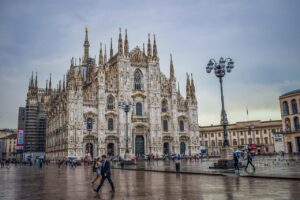
The crown jewel of Milan, the Duomo stands as one of the world’s most spectacular Gothic cathedrals. This architectural marvel took nearly six centuries to complete, resulting in a breathtaking facade adorned with 3,400 statues and 135 spires. The cathedral’s interior spans five naves, creating a sense of infinite space that leaves visitors speechless.
Insider Tips for Visiting the Duomo:
- Purchase Fast Track tickets online to skip lengthy queues
- Climb the 251 steps to the rooftop terraces for unparalleled city views
- Visit during golden hour (one hour before sunset) for magical lighting
- Explore the Duomo Museum to understand the cathedral’s fascinating construction history
La Scala Opera House: Where Opera Lives and Breathes
Teatro alla Scala represents the pinnacle of operatic excellence, hosting legendary performances since 1778. Even if you’re not an opera enthusiast, the theater’s museum offers fascinating insights into Milan’s cultural heritage. The building itself is an architectural gem, with its iconic neoclassical facade and opulent interior featuring red velvet seats and crystal chandeliers.
Planning Your La Scala Experience:
- Book tickets months in advance for popular performances
- Attend a guided tour during the day to explore behind-the-scenes areas
- Visit the adjacent museum housing costumes, instruments, and memorabilia
- Dress elegantly – La Scala maintains traditional formal dress codes
Santa Maria delle Grazie and Da Vinci’s Last Supper
Housing Leonardo da Vinci’s masterpiece “The Last Supper,” this UNESCO World Heritage site draws art lovers from across the globe. The 15th-century fresco, painted directly on the convent wall, represents one of the most important works in Western art history.
Essential Booking Information:
- Reservations are mandatory and must be made weeks or months in advance
- Visits are limited to 15 minutes with groups of maximum 25 people
- Photography is strictly prohibited
- Audio guides are available in multiple languages
Castello Sforzesco: A Journey Through Milanese History
This 15th-century fortress complex houses multiple museums showcasing art, archaeology, and musical instruments. The castle’s courtyards and towers provide glimpse into Milan’s ducal past, while the surrounding Sempione Park offers a peaceful retreat from urban energy.
Brera District: Milan’s Artistic Heart
The bohemian Brera neighborhood combines artistic heritage with contemporary sophistication. Home to the prestigious Pinacoteca di Brera art gallery, the area features cobblestone streets lined with art galleries, antique shops, and intimate restaurants. The district comes alive during aperitivo hours when locals gather in charming piazzas.
🛍️ Milan Shopping Guide: From High Fashion to Local Markets
Quadrilatero della Moda: The Fashion Quadrilateral
Milan’s legendary fashion district, bounded by Via Montenapoleone, Via Manzoni, Via della Spiga, and Corso Venezia, represents the global epicenter of luxury fashion. Here, flagship stores of Prada, Gucci, Versace, and Armani showcase their latest collections in palatial boutiques that are architectural marvels themselves.
Strategic Shopping Tips:
- Visit during Milan Fashion Week (February/March and September/October) for exclusive collections
- Many stores offer tax-free shopping for non-EU residents
- Personal shopping services are available at major boutiques
- Explore side streets for emerging designer boutiques
Galleria Vittorio Emanuele II: Shopping in Style
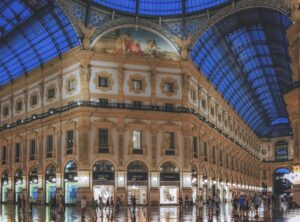 This 19th-century glass-domed arcade connects Piazza del Duomo to La Scala, housing luxury boutiques, historic cafes, and gourmet restaurants. The galleria itself is an architectural masterpiece, featuring intricate mosaics and iron-and-glass architecture that influenced shopping centers worldwide.
Navigli District: Alternative Shopping and Nightlife
The canal district offers a different shopping experience, with vintage stores, independent designers, and artisan workshops. By day, browse unique boutiques and antique markets. By evening, the area transforms into Milan’s premier nightlife destination.
Porta Ticinese and Corso di Porta Ticinese
This trendy area attracts young Milanese with its mix of vintage shops, record stores, and alternative fashion boutiques. The district maintains an edgy, artistic atmosphere that contrasts beautifully with the luxury of the fashion quadrilateral.
🍝 Milan Culinary Scene: From Traditional Trattorias to Michelin Stars
Traditional Lombard Cuisine
Milan’s culinary identity is deeply rooted in Lombard traditions, featuring hearty dishes that reflect the region’s agricultural heritage. Risotto alla milanese, the city’s signature dish, combines Arborio rice with saffron, bone marrow, and Parmigiano-Reggiano, creating a creamy, golden delicacy that embodies Milan’s sophistication.
Cotoletta alla milanese, a breaded veal cutlet, represents another cornerstone of local cuisine. Authentic versions are bone-in and cooked in clarified butter, resulting in a crispy exterior and tender interior that has inspired variations worldwide.
Must-Try Traditional Dishes:
- Osso buco: Braised veal shanks with vegetables and white wine
- Cassoeula: Hearty winter stew with cabbage and pork
- Panettone: Milan’s famous Christmas cake, now enjoyed year-round
- Michetta: Traditional Milanese bread rolls
Michelin-Starred Excellence
Milan boasts an impressive constellation of Michelin-starred restaurants, more than any other Italian city. These establishments push culinary boundaries while respecting traditional techniques and local ingredients.
Notable Michelin-Starred Restaurants:
- Osteria di Brera: Innovative interpretations of Lombard classics
- Il Luogo di Aimo e Nadia: Contemporary Italian cuisine with global influences
- Cracco: Celebrity chef Carlo Cracco’s flagship restaurant
- Contraste: Modern cuisine in an intimate setting
Aperitivo Culture: Milan’s Social Ritual
Aperitivo represents more than just happy hour – it’s a fundamental aspect of Milanese social life. Between 6 PM and 8 PM, bars and restaurants offer complimentary appetizers with drink purchases, creating opportunities for socializing and networking.
Best Aperitivo Locations:
- Navigli District: Canal-side bars with stunning sunset views
- Brera: Sophisticated venues attracting art and fashion crowds
- Isola: Trendy neighborhood with innovative cocktail bars
- Porta Nuova: Rooftop bars offering skyline panoramas
🏨 Where to Stay in Milan: Neighborhood Guide and Accommodation Tips
Centro Storico (Historic Center)
Staying in Milan’s historic heart puts you within walking distance of major attractions like the Duomo, La Scala, and Galleria Vittorio Emanuele II. This area offers luxury hotels housed in historic palaces, boutique properties with designer interiors, and convenient access to shopping and dining.
Recommended Hotels:
- Luxury: Grand Hotel et de Milan, Palazzo Parigi
- Mid-range: Hotel Spadari al Duomo, Antica Locanda Solferino
- Budget: Hotel Gran Duca di York, Ostello Bello Grande
Porta Nuova: Modern Milan
This ultra-modern district showcases Milan’s contemporary side, featuring striking skyscrapers and innovative architecture. The area offers business-oriented hotels with state-of-the-art facilities, making it ideal for corporate travelers and those who appreciate modern amenities.
Navigli: Bohemian Charm
The canal district provides a more authentic Milanese experience, with boutique hotels and bed-and-breakfasts housed in converted historic buildings. The area’s vibrant nightlife and restaurant scene make it popular with younger travelers and those seeking cultural immersion.
Brera: Artistic Elegance
Brera combines artistic heritage with sophisticated accommodations. The neighborhood’s boutique hotels often feature unique design elements and art collections, appealing to culturally minded travelers who appreciate beauty and craftsmanship.
🚇 Getting Around Milan: Transportation Guide
Public Transportation System
Milan’s efficient public transportation network includes metros, buses, and trams that connect all major attractions and neighborhoods. The system operates from approximately 6 AM to midnight (extended hours on weekends), with four metro lines serving the city and suburbs.
Transportation Tips:
- Purchase ATM daily/weekly passes for unlimited travel
- Download the ATM Milano app for real-time schedules
- Validate tickets before boarding to avoid fines
- Metro Line 1 (red) connects most tourist attractions
Bike Sharing and Walking
Milan’s flat terrain makes cycling enjoyable and practical. The city’s bike-sharing system, BikeMi, offers convenient short-term rentals with stations throughout the urban core. Many attractions are within walking distance of each other, particularly in the historic center.
Taxi and Ride Sharing
Licensed taxis operate throughout the city, though they can be expensive during peak hours. Ride-sharing services like Uber are available, offering convenient alternatives for late-night transportation or when carrying luggage.
🎭 Milan Culture and Entertainment: Arts, Music, and Nightlife
World-Class Museums
Beyond the famous Pinacoteca di Brera, Milan houses numerous museums showcasing art, design, and history. The city’s museum scene reflects its diverse cultural heritage and contemporary artistic innovation.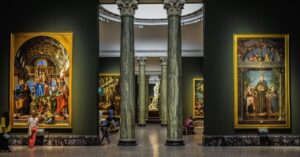
Essential Museums:
- Palazzo Reale: Rotating exhibitions featuring international artists
- Triennale Design Museum: Celebrating Milan’s design legacy
- Mudec (Museum of Cultures): Exploring global artistic traditions
- Fondazione Prada: Contemporary art in stunning architectural settings
Vibrant Nightlife Scene
Milan’s nightlife caters to diverse tastes, from sophisticated cocktail bars to energetic nightclubs. The city’s late-night scene reflects its fashion-forward personality, with venues that prioritize style and quality.
Nightlife Districts:
- Navigli: Canal-side bars and live music venues
- Isola: Trendy cocktail bars and craft beer pubs
- Porta Nuova: Upscale rooftop lounges with skyline views
- Brera: Wine bars and jazz clubs in intimate settings
🌟 Day Trips from Milan: Exploring Lombardy and Beyond
Lake Como: Alpine Beauty
Just one hour from Milan, Lake Como offers breathtaking alpine scenery, elegant villas, and charming lakeside towns. The area has attracted nobility and celebrities for centuries, creating an atmosphere of refined luxury amid stunning natural beauty.
Como Highlights:
- Bellagio: “Pearl of the Lake” with cobblestone streets and gardens
- Villa del Balbianello: Historic villa with spectacular lake views
- Varenna: Picturesque fishing village with medieval charm
Bergamo: Medieval Splendor
This UNESCO World Heritage city combines medieval architecture with contemporary culture. The historic upper town (Città Alta) features perfectly preserved fortifications, while the modern lower city offers shopping and dining opportunities.
Swiss Day Trips
Milan’s proximity to Switzerland enables easy day trips to Lugano or even Zurich. These excursions provide opportunities to experience different cultures and landscapes while maintaining Milan as your base.
📅 When to Visit Milan: Seasonal Guide and Events
Best Times to Visit
Milan experiences a humid subtropical climate with distinct seasons. Spring (April-May) and fall (September-October) offer ideal weather conditions with mild temperatures and fewer crowds. These periods coincide with Fashion Week events, adding extra excitement to your visit.
Major Events and Festivals
Fashion Week (February/March and September/October): The city transforms into the global fashion capital, with runway shows, parties, and industry events creating electric energy throughout the city.
Salone del Mobile (April): The world’s largest furniture fair attracts design enthusiasts and industry professionals, showcasing cutting-edge innovations in home design.
La Scala Season (December-July): The opera season brings world-class performances to Milan’s legendary theater, featuring renowned artists and classic productions.
Weather Considerations
Summers can be hot and humid, while winters are cold with occasional fog. However, each season offers unique experiences – summer brings outdoor dining and rooftop bars, while winter creates cozy atmospheres in traditional restaurants and cultural venues.
💡 Milan Travel Tips: Insider Secrets for the Perfect Visit
Cultural Etiquette
Milanese people appreciate style and sophistication. Dress well when visiting restaurants, theaters, or upscale shops. Italians typically dine late – lunch around 1-2 PM and dinner after 8 PM. Learning basic Italian phrases enhances your experience and shows respect for local culture.
Money and Payments
Italy uses the Euro, and most establishments accept credit cards. However, smaller cafes and markets may prefer cash. ATMs are widely available, and many offer English language options.
Safety and Health
Milan is generally very safe for tourists. Exercise normal precautions in crowded areas and on public transportation. The city offers excellent healthcare facilities, and pharmacies (farmacia) provide basic medical supplies and advice.
Language Tips
While many Milanese speak English, especially in tourist areas and upscale establishments, attempting Italian is always appreciated. Download a translation app for convenience, but don’t hesitate to use gestures – Italians are expressive communicators!
🏃♂️ Milan in Different Trip Durations
One Day in Milan
Focus on the historic center: Duomo and rooftop access, Galleria Vittorio Emanuele II shopping, aperitivo in Brera, and an evening stroll through the illuminated city center.
Three Days in Milan
Add La Scala (performance or museum tour), Castello Sforzesco exploration, Navigli district dining, and a day trip to Lake Como or Bergamo.
One Week in Milan
Include all major attractions, museum visits, shopping expeditions, multiple day trips, cooking classes, and deeper neighborhood exploration for authentic local experiences.
🙋♀️ Frequently Asked Questions About Milan Travel
Is Milan expensive to visit?
Milan is generally more expensive than other Italian cities, particularly for accommodation and dining in fashionable areas. However, budget options exist, and many attractions like churches and parks are free. Planning ahead and choosing accommodations outside the city center can significantly reduce costs while maintaining easy access to attractions.
How many days should I spend in Milan?
Three to four days allow you to see major attractions, experience the local culture, and take a day trip. One week enables deeper exploration and multiple excursions. Even a well-planned single day can provide meaningful insights into Milan’s character.
Do I need to speak Italian in Milan?
While Italian is the primary language, many Milanese speak English, especially in tourist areas, hotels, and upscale restaurants. Learning basic phrases enhances your experience and demonstrates cultural respect. Download a translation app for convenience.
Is Milan safe for tourists?
Milan is very safe for tourists. Exercise normal urban precautions: be aware of pickpockets in crowded areas, avoid displaying expensive items conspicuously, and stay alert on public transportation. The city center is well-patrolled and generally secure at all hours.
What is the best way to get from Milan airports to the city center?
From Malpensa Airport, take the Malpensa Express train (50 minutes to central Milan) or airport buses (45-60 minutes). From Linate Airport, buses connect to the city center in 25-30 minutes. Taxis are available but expensive. Book transfers in advance for convenience.
Can I visit the Last Supper without advance booking?
No, advance reservations are mandatory for viewing Leonardo da Vinci’s “The Last Supper.” Tickets must be booked weeks or months ahead through official channels. Walk-in visits are not possible due to conservation requirements and limited daily visitors.
What should I wear in Milan?
Milan is Italy’s fashion capital, so dressing well is important. Avoid overly casual clothing when visiting restaurants, theaters, or churches. Smart casual attire works for most situations. Pack comfortable walking shoes, as you’ll explore many areas on foot.
Is Milan a good base for exploring Northern Italy?
Absolutely! Milan’s central location and excellent transportation connections make it ideal for exploring Northern Italy. High-speed trains connect to Venice, Florence, and Rome. Regional trains provide access to Lake Como, Lake Maggiore, and the Italian Alps.
What is aperitivo and when does it happen?
Aperitivo is a beloved Italian social tradition occurring between 6 PM and 8 PM. Bars offer complimentary appetizers with drink purchases, creating opportunities for socializing before dinner. It’s an essential Milanese experience that combines food, drinks, and conversation.
Should I tip in Milan restaurants?
Tipping is not obligatory in Italy, as service charges are often included. However, leaving small change or rounding up the bill shows appreciation for good service. In upscale restaurants, 5-10% tips are appreciated but not expected.
🎭 1. Teatro alla Scala (La Scala) – 🌐 https://www.teatroallascala.org
🖼️ 2. Pinacoteca di Brera – 🌐 https://pinacotecabrera.org
🏛️ 3. Museo del Novecento –🌐 https://museodelnovecento.org
🖼️ 4. Fondazione Prada – 🌐 https://www.fondazioneprada.org
📚 5. Castello Sforzesco – 🌐 https://www.milanocastello.it
One thought on “Milan – Your Ultimate Guide to Italy’s Fashion Capital”