
Zakynthos Through Time: 2,500 Years of Island Heritage 📚
 Zakynthos’s strategic position in the Ionian Sea made it a coveted prize for ancient civilizations, where Homer first mentioned this emerald island in the Odyssey as a place of extraordinary beauty and abundance, establishing its reputation as one of Greece’s most enchanting destinations over 2,800 years ago. The island flourished under various rulers including Romans, Byzantines, Venetians, and British, each leaving distinctive cultural and architectural legacies that created Zakynthos’s unique character combining Italian elegance with Greek authenticity.
The island’s golden age arrived during Venetian rule (1484-1797) when aristocratic families built magnificent mansions, established cultural traditions, and developed the distinctive architecture that earned Zakynthos the nickname “Flower of the Orient” for its refined beauty and cultural sophistication. Venetian influence created the elegant neoclassical buildings, romantic piazzas, and artistic traditions that survived devastating earthquakes while British protection (1815-1864) introduced modern infrastructure and educational systems that prepared Zakynthos for its eventual union with Greece. 🏺
Modern Zakynthos balances heritage preservation with environmental protection, where the establishment of the National Marine Park in 1999 created Europe’s first protected area specifically designed for sea turtle conservation while sustainable tourism development ensures that traditional communities thrive alongside one of the Mediterranean’s most important wildlife sanctuaries, demonstrating successful integration of cultural heritage and environmental stewardship. 🏰
Table of Contents
Shipwreck Beach: World’s Most Photographed Paradise 🚢
Navagio Beach: Iconic Shipwreck
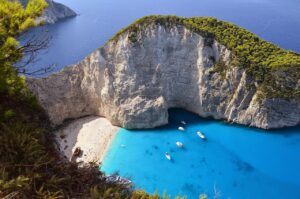
Shipwreck Beach (Navagio) represents the ultimate Mediterranean paradise, where a 1980 shipwreck creates one of the world’s most photographed beaches against dramatic limestone cliffs that rise 200 meters above crystal-clear turquoise waters and pristine white sand beaches accessible only by boat or dramatic clifftop viewpoints that provide spectacular panoramic photography opportunities.
The MV Panagiotis, a smuggler’s vessel that ran aground during a police chase, now serves as an iconic centerpiece for this enclosed bay where powerful currents and winds created the dramatic landscape that makes Navagio Beach instantly recognizable in travel photography worldwide. The shipwreck’s rust-colored hull contrasts beautifully with azure waters while surrounding cliffs provide natural amphitheater settings that amplify the beach’s extraordinary visual impact. ⚡
Clifftop Viewpoints: Breathtaking Perspectives
The clifftop viewpoints above Shipwreck Beach provide some of Greece’s most dramatic photography opportunities where carefully positioned observation platforms offer safe access to spectacular overlooks that capture the full scope of this natural wonder while maintaining appropriate distances from unstable cliff edges that require constant geological monitoring for visitor safety.
Professional photographers recommend early morning visits (sunrise to 10am) or late afternoon sessions (4-6pm) for optimal lighting that enhances water colors and cliff formations while avoiding midday harsh shadows that diminish the beach’s extraordinary beauty. Understanding weather patterns and seasonal variations helps time visits for clear skies and calm seas that provide ideal conditions for capturing perfect images of this world-famous destination. 🛡️
Beach Access and Boat Tours
Reaching Shipwreck Beach requires boat excursions from various ports including Zakynthos Town, Porto Vromi, and Agios Nikolaos, where tour operators provide different trip options including half-day tours, sunset cruises, and combined excursions that visit both Shipwreck Beach and the nearby Blue Caves for comprehensive coastal exploration experiences.
Boat tours typically include 30-45 minutes at the beach for swimming, photography, and relaxation while weather conditions determine daily operations with safety protocols that prioritize passenger welfare over tour schedules. Private boat charters offer flexible timing and personalized experiences while group tours provide economical options with fixed schedules that require advance booking during peak season when demand significantly exceeds capacity. 🏗️
Photography and Safety Guidelines
Shipwreck Beach photography requires understanding optimal angles, lighting conditions, and safety protocols where clifftop viewpoints provide dramatic aerial perspectives while beach-level shots capture intimate details of the shipwreck and surrounding natural beauty. Drone photography requires permits and awareness of aviation restrictions while respecting protected marine park regulations that limit aircraft activities near sensitive wildlife habitats.
Safety considerations include unstable cliff edges, sudden weather changes, and strong currents that make swimming challenging for inexperienced swimmers while designated viewing areas provide secure access to spectacular overlooks. Understanding local warnings and following official guidelines ensures memorable experiences while avoiding accidents that could endanger personal safety or damage fragile coastal environments requiring constant conservation efforts. 🐴
Shipwreck Beach Essentials
- Access: Boat tours only (no road access)
- Best Viewpoint: Navagio Beach Viewpoint (free parking)
- Boat Tour Duration: 3-6 hours including Blue Caves
- Best Times: Early morning or late afternoon for photography
- Swimming: Possible but strong currents – caution advised
- What to Bring: Waterproof camera, sun protection, non-slip shoes
Blue Caves: Nature’s Underwater Cathedral 💎
Geological Marvel: Sea Cave Formation
The Blue Caves represent one of nature’s most spectacular geological formations, where millennia of wave action carved intricate caverns into limestone cliffs while underwater openings create natural lighting effects that illuminate cave interiors with ethereal blue luminescence that changes throughout the day as sunlight angles shift and water conditions vary with tides and weather patterns.
These remarkable sea caves feature multiple chambers connected by underwater passages where snorkeling and swimming reveal hidden grottos, natural arches, and submarine formations that demonstrate the ongoing geological processes shaping Zakynthos’s dramatic coastline. The caves’ unique acoustics amplify wave sounds while creating cathedral-like atmospheres that enhance the spiritual and aesthetic impact of visiting these natural wonders. 🏺
Boat Exploration: Cave Adventures
Exploring the Blue Caves requires small boats or kayaks that can navigate narrow openings and shallow waters where larger vessels cannot access the most spectacular interior chambers and hidden passages that reveal the full extent of these remarkable formations. Tour operators provide specialized boats with experienced captains who understand tidal conditions, weather patterns, and safe navigation techniques essential for cave exploration.
Swimming and snorkeling inside the caves offer intimate experiences where crystal-clear waters provide excellent visibility for observing underwater rock formations, marine life, and the play of light that creates the caves’ famous blue illumination. Understanding safety protocols and following guide instructions ensures memorable adventures while protecting both visitors and fragile cave ecosystems that require careful management to prevent damage from excessive tourism pressure. 🛠️
Marine Life and Underwater Wonders
The Blue Caves support diverse marine ecosystems where protected waters provide habitat for various fish species, sea anemones, and other Mediterranean wildlife that thrive in the stable conditions created by cave environments. Snorkeling reveals underwater gardens where marine life adapts to unique lighting conditions while cave walls showcase geological layers that tell the story of ancient environmental changes.
The caves’ underwater topography includes deep chambers that extend well below sea level while shallow areas provide safe snorkeling opportunities for beginners and families seeking marine exploration without advanced diving skills. Understanding marine protection regulations and practicing responsible wildlife observation ensures these ecosystems remain healthy while providing educational opportunities for observing Mediterranean biodiversity in pristine natural settings. 🌺
Best Times and Conditions
Optimal Blue Caves experiences depend on weather conditions, sea state, and lighting factors where calm seas enable safe cave exploration while clear skies provide the intense sunlight necessary for creating spectacular blue illumination effects. Morning visits (10am-12pm) typically offer the best lighting conditions while afternoon tours may encounter rougher seas that limit cave access and swimming opportunities.
Seasonal variations affect cave accessibility where summer months provide reliable weather and calm seas while spring and autumn offer fewer crowds but more variable conditions that may limit tour operations. Understanding seasonal patterns and booking flexible tour options ensures optimal experiences while maintaining realistic expectations about weather-dependent activities that require careful planning and timing for maximum enjoyment. ⛪
Laganas Bay: Marine Park and Turtle Paradise 🐢
Loggerhead Turtle Conservation: Caretta Caretta
Laganas Bay serves as the Mediterranean’s most important nesting site for endangered loggerhead sea turtles (Caretta caretta), where over 80% of Greece’s turtle population returns annually to lay eggs on protected beaches that have supported this ancient species for thousands of years. The establishment of the National Marine Park of Zakynthos created comprehensive protection measures that balance turtle conservation with sustainable tourism through strict regulations and community education programs.
Female turtles arrive from May through August to nest on sandy beaches where temperature-dependent incubation determines hatchling gender while conservation volunteers monitor nests, protect eggs from predators, and guide newly hatched turtles safely to the sea. Understanding turtle biology and conservation challenges enhances appreciation for protection efforts while demonstrating successful collaboration between local communities, scientists, and tourism operators in preserving endangered species. 🐠
Responsible Turtle Watching
Ethical turtle watching requires following strict guidelines that minimize disturbance to nesting females and protect vulnerable hatchlings while providing meaningful wildlife experiences that support conservation through tourism revenue and public education. Licensed tour operators provide specialized boats with trained guides who understand turtle behavior, marine park regulations, and safe observation distances that ensure animal welfare remains the primary priority.
Turtle spotting tours operate during daylight hours when adult turtles surface to breathe while feeding on jellyfish and sea grass in shallow bay waters. Quiet approach techniques, limited group sizes, and no-touch policies protect turtles from stress while underwater viewing through glass-bottom boats or snorkeling provides intimate encounters without physical disturbance. Supporting certified operators ensures tour revenues contribute directly to conservation funding and research programs. 🏊♀️
Marine Park Regulations and Guidelines
The National Marine Park enforces comprehensive regulations that protect marine ecosystems through speed restrictions for boats, designated anchorage areas, seasonal beach access limitations, and strict penalties for violations that threaten wildlife or damage sensitive habitats. These measures ensure long-term sustainability while allowing appropriate levels of tourism that support local economies and conservation financing.
Visitor guidelines include no beach access during nesting season (May-August) in designated areas, speed limits for boats in turtle zones, prohibition of fishing in sensitive areas, and mandatory waste management to prevent marine pollution. Understanding and respecting these regulations demonstrates commitment to environmental protection while supporting community efforts that make Zakynthos a global model for successful marine conservation and sustainable tourism integration. 🍹
Conservation Education and Research
The Zakynthos Marine Research Centre provides educational programs, guided tours, and research opportunities that reveal the complex science behind sea turtle conservation while demonstrating how tourism can support rather than threaten endangered species when properly managed through community cooperation and scientific guidance. Visitors can participate in educational presentations, beach monitoring activities, and conservation projects that provide hands-on learning experiences.
Research activities include satellite tracking of adult turtles, genetic studies of population diversity, habitat restoration projects, and climate change impact assessments that demonstrate the long-term scientific commitment required for successful species protection. Understanding these research efforts enhances appreciation for conservation complexity while providing opportunities for visitors to contribute meaningfully to international wildlife protection efforts through volunteer programs and financial support. 🐢
Zakynthos Town: Venetian Elegance Restored 🏛️
Neoclassical Architecture: Phoenix from Ashes
Zakynthos Town demonstrates remarkable cultural resilience where devastating earthquakes in 1953 destroyed most historical buildings, yet the community rebuilt their capital using original architectural plans that preserved Venetian and neoclassical character while incorporating modern earthquake-resistant construction techniques. This reconstruction created a unique cityscape where traditional aesthetics combine with contemporary safety standards in ways that maintain authentic character while ensuring structural integrity.
The rebuilt town center features elegant mansions, romantic piazzas, and arcaded streets that recreate pre-earthquake grandeur while modern infrastructure supports contemporary needs including tourism facilities, commercial districts, and residential areas that house local families maintaining traditional island life within a historically accurate urban environment. Understanding this reconstruction story enhances appreciation for community dedication to cultural preservation following natural disasters. 💕
Solomos Square: Cultural Heart
Solomos Square serves as Zakynthos Town’s cultural and social center, where the tomb of Dionysios Solomos (author of the Greek National Anthem) provides focal point for a elegant plaza surrounded by neoclassical buildings housing museums, libraries, and cultural institutions that preserve and promote Zakynthian artistic traditions including literature, music, and visual arts that flourished under Venetian influence.
The square’s Museum of Solomos and Kalvos showcases literary heritage while surrounding cafes and restaurants provide perfect settings for observing contemporary Greek urban life within carefully preserved historical contexts. Evening strolls reveal illuminated architecture while seasonal festivals and cultural events demonstrate how traditional communities maintain cultural identity through active participation in artistic and social traditions that connect past and present. 🌊
Byzantine Museum: Sacred Art Collection
The Byzantine Museum houses one of Greece’s finest collections of religious art salvaged from churches destroyed in the 1953 earthquakes, where precious icons, religious artifacts, and ecclesiastical treasures demonstrate the sophisticated artistic traditions that flourished on Zakynthos for over 1,000 years. These rescued artworks represent irreplaceable cultural heritage while providing insights into Byzantine artistic techniques and religious symbolism.
The museum’s collection includes works by the Zakynthian School of painting, which developed distinctive styles combining Byzantine traditions with Renaissance influences introduced through Venetian cultural exchange. Understanding these artistic developments reveals how island communities adapted international influences while maintaining cultural authenticity and religious devotion that sustained communities through centuries of political change and cultural challenge. 🏘️
Venetian Bell Tower: Iconic Landmark
The reconstructed Venetian Bell Tower of St. Dionysios Church creates Zakynthos Town’s most recognizable landmark while serving as symbol of community resilience and cultural continuity following earthquake destruction. This faithful reconstruction demonstrates traditional building techniques and architectural proportions while modern construction methods ensure structural stability in seismically active regions.
The tower’s strategic position provides panoramic views over Zakynthos Town, the surrounding countryside, and the Ionian Sea while its bells continue traditional timekeeping and religious functions that connect contemporary life with historical customs. Climbing the tower requires moderate fitness while photography opportunities capture both urban landscapes and natural beauty that characterize Zakynthos’s unique geographic position and cultural development. 🤝
Authentic Zakynthian Cuisine: Island Flavors 🍽️
Traditional Specialties: Venetian Influences
Zakynthian cuisine reflects the island’s multicultural heritage where Venetian culinary traditions merged with Greek cooking techniques to create distinctive dishes that showcase local ingredients including exceptional olive oil, aromatic herbs, fresh seafood, and unique regional specialties like ladotyri cheese and thick local honey that provide authentic flavors unavailable elsewhere in Greece.
Signature dishes include rabbit stew with wine and herbs (kouneli krasato), cod with garlic sauce (baccalà), traditional meat pie (kreatopita), and unique sweets like mantolato (nougat) and pastitsada (pasta with spiced meat sauce) that demonstrate Italian influences adapted to local ingredients and Greek cooking methods. Understanding these culinary traditions enhances dining experiences while supporting restaurants that maintain traditional preparation methods and family recipes. 🦑
Local Products and Regional Wines
Zakynthos produces exceptional agricultural products including estate olive oils from ancient groves, aromatic herbs from mountain slopes, traditional cheeses from free-range livestock, and unique honey varieties that reflect the island’s diverse flora and traditional farming methods. These products form the foundation for authentic Zakynthian cuisine while providing opportunities for direct purchasing from local producers and family businesses.
Local wineries produce distinctive wines from indigenous grape varieties including Robola, Avgoustiatis, and Pavlos that thrive in Zakynthos’s Mediterranean climate while modern viticulture techniques enhance traditional winemaking methods. Wine tastings and cellar tours provide educational experiences about local viticulture while supporting small-scale producers who maintain traditional agricultural practices within contemporary quality standards and sustainable farming methods. 🍷
Seaside Tavernas: Fresh Seafood
Waterfront tavernas throughout Zakynthos serve exceptional fresh seafood where daily catches include sea bream, red mullet, sardines, and octopus prepared using traditional methods that preserve natural flavors while simple preparations including grilling, baking with herbs, and traditional fish soups showcase ingredient quality rather than complex cooking techniques that might mask natural seafood flavors.
Family-run establishments often feature recipes passed down through generations of fishing families who understand seasonal availability, optimal preparation methods, and traditional accompaniments including local vegetables, wild greens, and homemade bread that create complete dining experiences reflecting authentic island food culture. Understanding fishing traditions and seasonal patterns enhances appreciation for sustainable seafood practices and traditional maritime culture. 🌅
Sweet Traditions: Venetian Desserts
Zakynthian dessert traditions combine Greek honey-based sweets with Italian pastry techniques to create unique confections including mandolato (white nougat with almonds), pastitsio (sweet pasta dessert), and traditional preserved fruits that demonstrate the sophisticated culinary exchange that occurred during centuries of Venetian rule while family recipes maintain authentic preparation methods and seasonal ingredients.
Local pastry shops and traditional confectioneries preserve these sweet traditions while adapting to contemporary tastes and dietary requirements through careful ingredient sourcing and traditional preparation methods that ensure authentic flavors and textures. Understanding dessert traditions and trying regional specialties provides insights into cultural exchange while supporting businesses that maintain traditional culinary heritage through active practice and community transmission of family recipes. 🥙
Getting to Zakynthos: Transportation Guide ✈️
Flying to Paradise: Airport Connections
Zakynthos International Airport receives direct flights from major European cities during summer season while year-round connections via Athens provide access for international travelers seeking this Ionian paradise. The airport’s convenient location just 4 kilometers from Zakynthos Town enables quick transfers to accommodations while car rental facilities at the airport provide immediate mobility for independent island exploration.
Charter flights and budget airlines offer seasonal connections from UK, Germany, and other European destinations while Olympic Air and Aegean Airlines provide reliable year-round service via Athens with multiple daily flights during peak season. Understanding flight schedules and booking advance ensures optimal travel timing while airport transfer options include taxis, buses, and rental cars that connect directly with accommodation areas and major attractions. 🛣️
Ferry Connections: Scenic Sea Routes
Ferry services from Kyllini on the Peloponnese provide scenic alternative transportation where vehicle ferries accommodate cars, motorcycles, and foot passengers while the 90-minute journey offers opportunities for relaxation and sea views that begin the island experience before arrival. Multiple daily departures during summer ensure flexible scheduling while advance booking recommended for vehicles during peak season.
Ferry travel provides economical transportation for travelers with vehicles while foot passengers enjoy comfortable facilities and outdoor decks perfect for photography and wildlife observation during crossings. Understanding ferry schedules, booking procedures, and port facilities ensures smooth transfers while the journey itself becomes part of the travel experience rather than simply transportation between destinations. 🚌
Island Transportation: Getting Around
Rental cars provide optimal mobility for exploring Zakynthos where mountainous terrain, scattered beaches, and limited public transportation make independent travel essential for accessing remote areas and timing visits optimally for photography and crowd avoidance. International and local rental agencies offer various vehicle types while booking advance ensures availability during peak season when demand significantly exceeds supply.
Public bus services connect major towns and popular beaches with seasonal schedules that accommodate tourist needs while taxi services provide convenient point-to-point transportation for specific destinations and airport transfers. Understanding transportation options and planning appropriate mobility ensures comprehensive island exploration while reducing environmental impact through efficient travel planning and route optimization. 🚕
Seasonal Zakynthos: Year-Round Island Beauty 🌞
Spring Awakening (April-May)
Spring transforms Zakynthos into a wildflower paradise where comfortable temperatures (18-25°C), blooming landscapes, and emerging turtle activity create ideal conditions for nature observation, hiking, and cultural exploration while swimming becomes pleasant and accommodation costs remain moderate compared to peak summer pricing. Wild orchids and Mediterranean herbs carpet hillsides while turtle nesting season begins providing opportunities for wildlife observation.
Easter celebrations showcase Orthodox traditions while reduced tourist numbers allow intimate cultural experiences and personalized attention from local businesses. Restaurant terraces become comfortable for extended dining while mild weather enables comprehensive island exploration including mountain villages, archaeological sites, and coastal areas without extreme heat or overwhelming crowds that characterize peak tourist season. 🌸
Summer Peak (June-August)
Summer brings classic Mediterranean conditions where warm weather (25-32°C), calm seas, and peak turtle nesting activity create optimal conditions for marine life observation while beach facilities operate at full capacity with complete amenities and water sports opportunities. This period offers maximum service availability while requiring advance booking and heat management strategies for comfortable exploration during the busiest tourist season.
Turtle watching reaches peak activity while boat tours operate comprehensive schedules accessing all major attractions including Shipwreck Beach, Blue Caves, and remote beaches. Evening dining extends late into warm nights while cultural events and festivals provide entertainment and authentic cultural experiences that showcase traditional music, dance, and local celebrations. ☀️
Autumn Excellence (September-October)
Autumn provides arguably the best Zakynthos experiences where warm seas, comfortable air temperatures, and reduced crowds create optimal conditions for both marine life observation and beach activities while maintaining excellent weather for hiking and outdoor exploration. This period offers exceptional value with reduced accommodation costs while turtle activity continues and restaurants operate without summer overcrowding pressures.
Sea temperatures remain ideal for swimming and snorkeling well into October while comfortable hiking conditions return for exploring mountain trails and village paths during pleasant daylight hours. Traditional harvest activities including grape picking and olive collection provide cultural insights while golden light and clear skies create spectacular photography conditions that capture Zakynthos at its most beautiful and authentic without summer tourist pressures. 🍂
Winter Serenity (November-March)
Winter reveals Zakynthos’s authentic character where local life predominates and the island returns to traditional rhythms while reduced tourist services and occasional weather limitations are balanced by intimate cultural experiences, dramatic storm watching, and peaceful appreciation of natural beauty without crowds or commercial distractions that characterize peak tourist seasons.
Many seasonal businesses close while those remaining often provide special winter rates and personalized attention that reveals authentic local culture and community life. Weather patterns bring occasional storms that create spectacular coastal scenery while clear days provide exceptional visibility and photographic opportunities that showcase natural beauty in different atmospheric conditions perfect for cultural immersion and authentic island experiences. ❄️
Where to Stay: From Village Houses to Luxury Resorts 🏨
Luxury Beach Resorts: Comprehensive Amenities
Luxury resorts along Zakynthos’s coastline provide comprehensive amenities including private beach access, spa facilities, multiple restaurants, and organized activities while maintaining easy access to major attractions through shuttle services or short drives along scenic coastal routes. These properties typically offer extensive facilities, international service standards, and family-friendly amenities that appeal to visitors seeking both comfort and convenience.
Properties like Lesante Blu and Porto Zante combine beachfront locations with luxury facilities while many resorts provide cultural programming including guided tours, traditional cooking classes, and marine conservation presentations that enhance understanding of local heritage alongside recreational activities. Many luxury properties offer packages combining accommodation with boat tours and island excursions that provide comprehensive Zakynthos experiences without transportation concerns. 💕
Boutique Hotels: Authentic Character
Boutique hotels throughout Zakynthos provide intimate experiences where traditional architecture, personalized service, and family hospitality create authentic accommodations that reflect island character while modern amenities ensure contemporary comfort. These properties typically feature 10-20 rooms with individual design, local artwork, and cultural touches that provide genuine connections with Zakynthian heritage and hospitality traditions.
Properties in Zakynthos Town showcase neoclassical architecture while coastal boutique hotels often feature traditional Ionian design elements including stone construction, wooden balconies, and garden courtyards that create peaceful retreats. Understanding boutique hotel character and booking advance ensures authentic experiences that support local families and businesses maintaining traditional hospitality within heritage tourism contexts. 🌊
Family-Run Guesthouses: Local Hospitality
Family-run guesthouses throughout Zakynthos provide authentic experiences where local families share their homes, knowledge, and traditional hospitality while offering budget-friendly accommodation that supports community life and provides insights into contemporary Greek island culture. These intimate properties often include homemade breakfasts, local recommendations, and personal attention that larger establishments cannot match.
Village guesthouses require minimal transportation planning while coastal properties often provide direct beach access and family atmosphere that appeals to travelers seeking authentic cultural experiences over luxury amenities. Understanding guesthouse culture and expectations enhances stay quality while supporting traditional families who maintain hospitality customs and contribute to sustainable tourism development that benefits local communities rather than external corporations. 🏘️
| Type | Price Range | Best For | Character |
|---|---|---|---|
| Luxury Resort | €200-500/night | Families, Luxury | Modern, Full-service |
| Boutique Hotel | €100-280/night | Couples, Culture | Authentic, Stylish |
| Family Guesthouse | €40-85/night | Budget, Cultural | Local, Personal |
| Beach Apartment | €70-160/night | Self-catering, Freedom | Independent, Flexible |
Insider Tips: Mastering Zakynthos Like a Local 💡
Timing Your Visit: Crowds and Optimal Experiences
Zakynthos experiences dramatic seasonal variations where late spring (May) and early autumn (September-October) provide optimal weather conditions, reasonable crowds, and moderate pricing while summer months (June-August) bring maximum tourists, intense heat, and premium costs that require advance planning and strategic timing for comfortable exploration of major attractions and natural areas.
Early morning boat tours (8-10am) to Shipwreck Beach and Blue Caves avoid crowds and provide excellent lighting for photography while sunset tours offer romantic experiences but attract maximum participants requiring advance booking. Understanding daily patterns and seasonal rhythms allows strategic planning that maximizes enjoyment while minimizing typical tourist frustrations including overcrowding, excessive heat, and inflated pricing during peak periods. 📸
Photography Secrets and Best Viewpoints
Zakynthos provides extraordinary photography opportunities where understanding optimal lighting, weather conditions, and hidden viewpoints creates professional-quality images that capture both natural beauty and authentic cultural moments. The famous Shipwreck Beach viewpoint requires early arrival for optimal lighting while alternative perspectives from boat level and surrounding cliffs reveal different aspects of this world-famous destination.
Blue Caves photography benefits from understanding how light penetration creates the signature luminescence while turtle watching requires patience, telephoto lenses, and respect for marine park regulations that protect wildlife. Many locations offer spectacular sunset opportunities while sunrise photography provides solitude and dramatic lighting that enhances natural beauty without tourist crowds that characterize popular viewpoints during peak visiting hours. 🌅
Marine Park Etiquette: Responsible Tourism
Visiting Zakynthos’s marine protected areas requires understanding conservation regulations and practicing responsible tourism that supports rather than threatens endangered species and fragile ecosystems. Turtle watching etiquette includes maintaining appropriate distances, avoiding flash photography, and choosing certified tour operators who prioritize wildlife welfare over entertainment value while contributing tour revenues to conservation funding and research programs.
Beach access restrictions during nesting season (May-August) protect vulnerable turtle nests while speed limits and designated routes for boats ensure marine safety without disrupting feeding and mating behaviors. Understanding and respecting these regulations demonstrates commitment to environmental protection while supporting community conservation efforts that make Zakynthos a global model for successful marine protection and sustainable tourism integration. 🤝
Budget Optimization and Money-Saving Tips
Zakynthos expenses vary significantly based on timing, accommodation choices, and activity selection where understanding local pricing patterns, seasonal variations, and authentic versus tourist-focused establishments helps optimize budgets while maintaining quality experiences. Accommodation represents the largest expense while strategic choices between luxury resorts, boutique hotels, and family guesthouses affect total costs significantly.
Dining costs range from €12-20 for authentic taverna meals to €40-65 for premium restaurants with spectacular views while self-catering options and local market shopping provide budget alternatives that maintain authentic experiences through direct engagement with local producers and traditional food culture. Transportation choices, tour selection, and souvenir shopping represent additional cost variables requiring advance planning and price comparison for optimal budget management. 💰
Daily Budget Guide
- Budget Day (€45-70): Ferry transport, public beaches, taverna meals, self-guided exploration
- Mid-Range Day (€90-140): Boat tours, restaurant dining, car rental, organized activities
- Luxury Day (€180-320): Private tours, fine dining, spa services, premium accommodations
- Special Experience (€250-450): Helicopter tours, private yacht charters, exclusive dining, luxury spa treatments
Beyond the Highlights: Hidden Zakynthos Treasures 🗺️
Secret Beaches and Remote Coves
Zakynthos’s extensive coastline conceals numerous spectacular beaches and secluded coves accessible by hiking trails, boat excursions, or local knowledge that provide alternatives to famous Shipwreck Beach while showcasing diverse coastal beauty that characterizes different regions of the island. These hidden gems often provide more privacy and authentic experiences while requiring additional effort that filters out casual visitors seeking only convenient access.
Xigia Beach features natural sulfur springs that create therapeutic swimming while Gerakas Beach provides important turtle nesting habitat with seasonal access restrictions. Porto Limnionas offers dramatic cliff diving opportunities while Marathonisi Island (Turtle Island) provides pristine swimming accessible only by boat with opportunities for wildlife observation in protected marine environments that demonstrate successful conservation management. 🏊♀️
Mountain Villages and Traditional Life
Zakynthos’s mountainous interior preserves traditional village life where agricultural communities maintain ancient customs, traditional crafts, and cultural practices that provide authentic insights into Greek island culture away from coastal tourism development. These villages often feature stone architecture, family tavernas serving local specialties, and community festivals that welcome respectful visitor participation while maintaining authentic character.
Keri village showcases traditional architecture and lighthouse access while Loucha provides insight into agricultural life and traditional pottery making. Volimes demonstrates mountain culture and produces some of the island’s finest olive oil while Anafonitria Monastery offers spiritual experiences and historical significance related to St. Dionysios, Zakynthos’s patron saint. Exploring these communities provides broader context for understanding island culture beyond tourist areas. 🏰
Adventure Activities and Outdoor Exploration
Zakynthos provides opportunities for various adventure activities that showcase natural beauty while providing physical challenges and unique perspectives on island geography and ecology. Hiking trails connect traditional villages, archaeological sites, and scenic viewpoints while revealing diverse ecosystems and wildlife habitats that support endemic species and migratory birds that use the island as stopover point during seasonal migrations.
Kayaking excursions explore coastal caves, hidden beaches, and marine protected areas while rock climbing opportunities exist on limestone cliffs that require proper equipment and local guidance. Diving and snorkeling reveal underwater caves, marine life, and geological formations while cycling tours connect rural areas and traditional communities through scenic routes that showcase agricultural landscapes and traditional land use patterns. 🛶
Zakynthos Magic Awaits ✨
Zakynthos represents the absolute pinnacle of Greek island perfection, where every element—from the world-famous Shipwreck Beach perched beneath dramatic cliffs to endangered sea turtles nesting on protected shores—seems carefully orchestrated by nature’s finest artists rather than mere geological chance. This extraordinary island achieves what few destinations manage: seamlessly blending spectacular natural wonders with profound environmental stewardship while maintaining authentic Greek character that transforms every visitor into a passionate advocate for marine conservation and sustainable tourism.
The island’s greatest magic lies not in any single attraction but in the extraordinary way authentic Zakynthian culture thrives within perfectly preserved natural settings, creating experiences where swimming in luminescent Blue Caves, witnessing ancient turtle rituals, exploring dramatic coastal formations, and dining in traditional seaside tavernas become natural parts of comprehensive cultural immersion that reveals Greece as you’ve always dreamed it would be—pristine, magical, and absolutely unforgettable.
As you plan your Zakynthos adventure, remember that this special island rewards both careful planning and spontaneous discovery while respecting marine protection and supporting traditional communities ensures that future generations can experience the same magic that has attracted travelers and wildlife for thousands of years. Come prepared to be amazed by beauty that defies description, moved by conservation success stories that inspire hope, and welcomed by Greek hospitality that makes every visitor feel like family. Yamas! Welcome to Zakynthos—where emerald dreams become Mediterranean reality. 🚢🌊

