
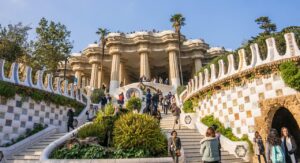
 Perched high on Carmel Hill in Barcelona’s Gràcia district, Park Güell stands as one of Antoni Gaudí’s most whimsical and colorful creations. This UNESCO World Heritage site isn’t just a park—it’s a living fairy tale where architecture meets nature in the most extraordinary way imaginable.Originally conceived as a residential garden city for Barcelona’s elite in the early 1900s, Park Güell has evolved into one of Spain’s most visited attractions. The park welcomes over 12 million visitors annually, each drawn to its iconic mosaic salamander, undulating benches, and breathtaking views over the Mediterranean city.
The Genius Behind Park Güell: Antoni Gaudí’s Vision
 Count Eusebi Güell commissioned Antoni Gaudí in 1900 to create an exclusive residential development inspired by English garden cities. The collaboration between patron and architect resulted in something far more magical than originally planned. Gaudí’s organic architectural style, characterized by flowing curves and natural forms, transformed the hillside into an artistic wonderland.
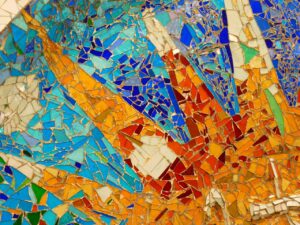
The project’s commercial failure as a housing development proved to be Barcelona’s artistic gain. Only two houses were ever built, but Gaudí’s innovative techniques—including his revolutionary use of broken ceramic tiles called “trencadís”—created a template for modern park design that influences landscape architects worldwide.
Must-See Attractions Within Park Güell
The Dragon Stairway and Famous Salamander
The park’s most photographed resident, the colorful mosaic salamander (often called a dragon), guards the monumental staircase at the main entrance. This ceramic creature, standing 2.4 meters tall, showcases Gaudí’s mastery of the trencadís technique. The salamander’s vibrant blues, greens, and golds create a mesmerizing pattern that changes 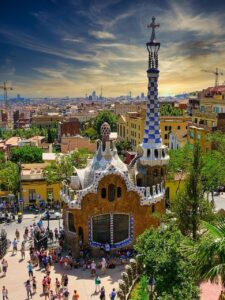 with the Mediterranean light throughout the day.
The Hypostyle Hall: A Forest of Columns
Originally designed as a market space for the planned community, the Hypostyle Hall features 86 Doric columns that create a surreal forest effect. The hall’s ceiling, decorated with colorful medallions and rosettes, demonstrates Gaudí’s ability to blend classical elements with his signature organic style. The acoustics here are remarkable—whisper at one end, and someone at the opposite end can hear you clearly.
The Serpentine Bench: Comfort Meets Art
The world’s longest park bench snakes along the edge of the main terrace for 110 meters. Designed by Gaudí’s collaborator Josep Maria Jujol, this undulating masterpiece isn’t just beautiful—it’s ergonomically perfect. The bench’s curves naturally accommodate the human body, while its mosaic surface tells stories through fragments of dishes, bottles, and tiles donated by local families.
Gaudí’s House Museum
The pink house where Gaudí lived from 1906 to 1925 now serves as a museum showcasing his personal belongings, furniture designs, and architectural drawings. The museum provides intimate insight into the daily life of Barcelona’s most famous architect, displaying everything from his workshop tools to personal photographs.
Planning Your Visit: Tickets, Times, and Practical Information
Ticketing and Entry Requirements
Park Güell operates on a timed entry system for the monumental zone, the area containing the main attractions. Tickets must be purchased in advance online, as same-day availability is extremely limited. The park limits entry to 400 visitors every 30 minutes to preserve the site and ensure a quality experience.
Adult tickets cost €10 during peak season (March through October) and €7 during off-peak periods. Children under 7 enter free, while seniors over 65 and students receive discounted rates. Barcelona residents enjoy free access on Sundays after 3 PM and the first Sunday of each month.
Best Times to Visit
Early morning slots (8:00-9:30 AM) offer the most serene experience with fewer crowds and softer lighting perfect for photography. Late afternoon visits (after 5:00 PM) provide stunning sunset views over Barcelona, though these time slots book up quickly during summer months.
Winter visits offer unique advantages: shorter queues, comfortable temperatures, and dramatic skies that create striking backdrops for the park’s colorful mosaics. However, some outdoor areas may close during inclement weather.
Getting There: Transportation Options
Metro Line 3 (Lesseps or Vallcarca stations) provides the most convenient access, followed by a 15-20 minute uphill walk. Bus routes 24, 25, 32, and 92 stop closer to the park entrance. For a more scenic approach, take the historic Park Güell bus (Bus Güell) which runs a circular route from various Barcelona neighborhoods.
Taxi services and ride-sharing apps offer door-to-door convenience, though traffic can be heavy during peak tourist seasons. The park provides limited paid parking, but spaces fill quickly during busy periods.
Hidden Gems and Lesser-Known Secrets
The Austrian Gardens
Beyond the main attractions, the park’s free areas contain hidden treasures. The Austrian Gardens, located in the park’s upper section, offer peaceful walking paths and spectacular panoramic views. These gardens feature native Mediterranean vegetation and provide habitat for local bird species.
The Calvary Monument
At the park’s highest point stands a stone cross marking the location originally intended for a chapel. The climb to this monument rewards visitors with 360-degree views of Barcelona, the Mediterranean Sea, and the surrounding Catalonian countryside. This spot remains relatively uncrowded, making it perfect for contemplation and photography.
The Porter’s Lodge
The whimsical gatehouses at the park’s entrance, designed to look like gingerbread houses from a fairy tale, originally served as the porter’s lodge and administrative offices. These buildings now house gift shops and information centers, but their exterior mosaics and organic shapes represent some of Gaudí’s most imaginative work.
Photography Tips and Instagram-Worthy Spots
Park Güell offers countless photographic opportunities, from macro shots of intricate mosaic details to wide-angle captures of the cityscape. The golden hour, approximately one hour before sunset, provides the most flattering light for both portraits and architectural photography.
The serpentine bench area becomes particularly magical during late afternoon when the western sun illuminates the colorful tiles. For crowd-free shots, focus on the park’s architectural details rather than wide vistas, and explore the free areas where fewer tourists venture.
Professional photographers should note that tripods require special permits, and commercial photography needs advance authorization from park management. However, smartphone photography and casual cameras are always welcome.
Family-Friendly Features and Accessibility
Park Güell welcomes families with children, offering interactive elements that engage young visitors. The park’s fairy-tale atmosphere captivates children’s imaginations, while educational programs help them understand Gaudí’s architectural innovations. Family restrooms and baby-changing facilities are available near the main entrance.
The park has made significant accessibility improvements in recent years. While the hilly terrain presents challenges, wheelchair-accessible paths lead to several viewpoints, and the main terrace area accommodates mobility devices. Audio guides are available in multiple languages, including versions designed for visually impaired visitors.
Seasonal Considerations and Weather
Barcelona’s Mediterranean climate makes Park Güell enjoyable year-round, but each season offers distinct experiences. Spring (March-May) brings mild temperatures and blooming flowers throughout the park’s gardens. Summer (June-August) provides the longest daylight hours but also the highest temperatures and largest crowds.
Autumn (September-November) offers ideal visiting conditions with comfortable temperatures, fewer tourists, and stunning light for photography. Winter (December-February) sees the fewest visitors and offers unique perspectives of the park’s architecture against dramatic skies, though some outdoor areas may have reduced hours.
Combining Park Güell with Other Barcelona Attractions
Park Güell pairs perfectly with other Gaudí sites through Barcelona’s Modernist Route. The nearby Sagrada Familia, Casa Batlló, and Casa Milà (La Pedrera) can be visited using combination tickets that offer significant savings. The Gaudí Bundle ticket provides access to all major Gaudí sites over multiple days.
The Gràcia neighborhood surrounding Park Güell deserves exploration in its own right. This bohemian district features narrow streets, cozy cafés, and local markets that provide authentic Barcelona experiences away from tourist crowds. The area’s village-like atmosphere offers a striking contrast to the park’s architectural grandeur.
Dining and Shopping Options
While Park Güell has limited dining options within its boundaries, the surrounding Gràcia neighborhood offers excellent restaurants and cafés. Traditional Catalan eateries serve local specialties like pan con tomate and paella, while trendy bistros cater to international tastes.
The park’s gift shops sell unique souvenirs including miniature replicas of the famous salamander, books about Gaudí’s work, and artisanal items inspired by the park’s mosaics. For more extensive shopping, the nearby Mercado de la Llibertat offers local products and gourmet foods.
Frequently Asked Questions
How much does Park Güell cost to visit?
Park Güell tickets cost €10 for adults during peak season and €7 during off-peak times. Children under 7 enter free. Senior citizens (65+) and students receive discounted rates of €7 and €5 respectively.
What are the opening hours of Park Güell?
Park Güell is open daily from 8:00 AM to 8:30 PM during summer months (April-October) and 8:00 AM to 6:30 PM in winter (November-March). The monumental zone requires timed entry tickets.
How long should I spend at Park Güell?
Plan to spend 2-3 hours exploring Park Güell thoroughly. This allows time to admire the mosaics, take photos, explore the free areas, and enjoy the panoramic views of Barcelona.
Can I visit Park Güell without booking tickets in advance?
While you can access the free areas of Park Güell without tickets, the main monumental zone requires advance booking. Same-day tickets are rarely available, especially during peak tourist season.
Is Park Güell suitable for people with mobility issues?
The park has wheelchair-accessible paths to several viewpoints and the main terrace area. However, the hilly terrain and many stairs can be challenging for visitors with mobility issues. Contact the park in advance for specific accessibility information.
Are there guided tours available?
Yes, Park Güell offers audio guides in multiple languages, and numerous tour companies provide guided visits. Official park guides are available for group bookings, and many Barcelona city tours include Park Güell as a major stop.
Conservation and Future Developments
Park Güell faces ongoing challenges from weather erosion, visitor impact, and urban pollution. The park management implements continuous conservation programs to preserve Gaudí’s original mosaics and architectural elements. Recent restoration projects have focused on the serpentine bench and the hypostyle hall’s decorative elements.
Future development plans include improved visitor facilities, enhanced accessibility features, and expanded educational programs. The park’s management balances preservation needs with visitor access, ensuring that future generations can continue to experience Gaudí’s architectural genius.
Conclusion: Why Park Güell Remains Unmissable
Park Güell represents more than just a tourist attraction—it embodies the creative spirit of Barcelona and the visionary genius of Antoni Gaudí. Every mosaic tile, every curved surface, and every architectural detail tells a story of artistic innovation and cultural identity.
Whether you’re an architecture enthusiast, a photography lover, or simply someone seeking beauty in unexpected places, Park Güell delivers an experience that lingers long after your visit ends. The park’s ability to surprise and delight visitors, regardless of age or background, confirms its status as one of the world’s most remarkable public spaces.
As you plan your Barcelona adventure, make Park Güell a priority. Book your tickets in advance, arrive with comfortable walking shoes, and prepare to be amazed by one of humanity’s most colorful and imaginative architectural achievements. In a city filled with wonders, Park Güell stands apart as a testament to the power of dreams made manifest in stone, ceramic, and boundless creativity.